Charu Chandrasekera PhD #
Dr. Charu Chandrasekera is the founder and executive director of the Canadian Institute for Animal-Free Science (formerly the Canadian Centre for Alternatives to Animal Methods, CCAAM), Canada’s first national center dedicated to replacing animals in biomedical research, regulatory testing, and education. She holds a Ph.D. in Biochemistry & Molecular Biology and has transitioned from traditional animal research to becoming a leading advocate for animal-free science, influencing Canadian policy and scientific practice. The Canadian Institute for Animal-Free Science promotes 21st-century innovative methods (in vitro, in silico, 3D printing) to replace animal testing, with a mission to transform medical research and regulatory toxicology through ethical, human-relevant science.
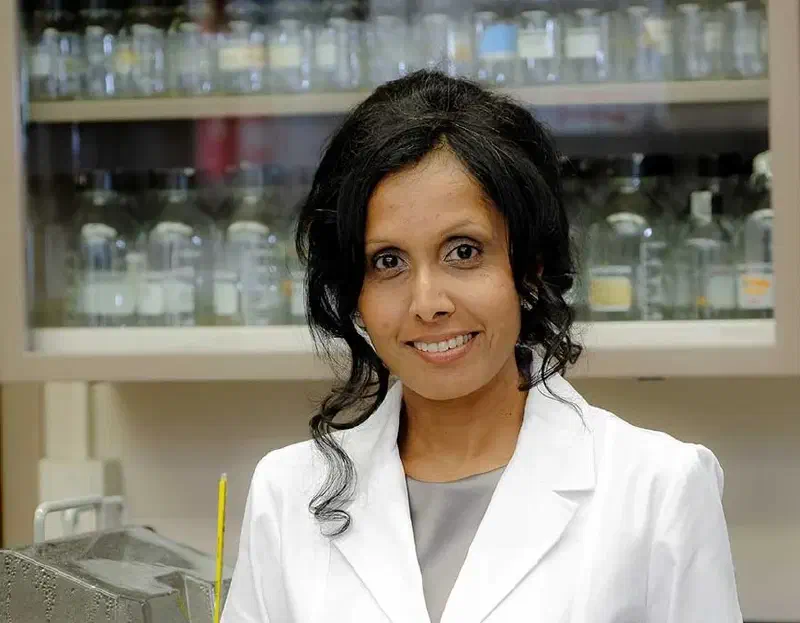
Canada’s first non-animal national research center
Credit: University of Windsor
Introduction #
The use of animals in biomedical research and regulatory testing has long been a contentious issue, balancing scientific necessity against ethical concerns. Dr. Charu Chandrasekera, a biomedical scientist and former animal researcher, has emerged as a pivotal figure in Canada advocating for a paradigm shift toward animal-free science. Her leadership in founding the Canadian Institute for Animal-Free Science (CIAFS, formerly the Canadian Centre for Alternatives to Animal Methods, CCAAM) has positioned Canada at the forefront of developing and validating alternative methods that replace animals in research, education, and regulatory toxicology.
This report provides a detailed biography of Dr. Chandrasekera, outlines her key contributions to animal-free science, and describes the mission and work of CIAFS.
Professional Background and Achievements of Dr. Charu Chandrasekera #
Dr. Charu Chandrasekera’s academic and professional trajectory underscores her evolution from a traditional biomedical researcher to a champion of animal-free science. She earned her Ph.D. in Biochemistry and Molecular Biology from the University of Calgary, specializing in cardiovascular research. Early in her career, she worked in animal research labs, including at the Halifax Heart Centre, where she conducted heart failure research using mouse and rabbit models. This experience led her to question the scientific validity and ethical justification of animal testing, as she observed discrepancies between animal models and human biology, and experienced a personal moral awakening regarding animal sentience 1.
By 2012, Dr. Chandrasekera left traditional academia to join the Physicians Committee for Responsible Medicine, a U.S.-based nonprofit advocating for plant-based medicine and alternatives to animal research. This period exposed her to a global movement toward reducing animal testing and provided her with a network of scientists, regulators, and industry leaders invested in alternative methods 1.
In October 2017, she founded the Canadian Centre for Alternatives to Animal Methods (CCAAM) at the University of Windsor, the first and only national center in Canada dedicated exclusively to replacing animals in biomedical research, regulatory testing, and education. CCAAM’s subsidiary, the Canadian Centre for the Validation of Alternative Methods (CaCVAM), focuses on validating non-animal methods for regulatory toxicology. In October 2019, she opened the lab, further advancing the institute’s capabilities. Her leadership has been instrumental in shaping Canadian policy, including landmark legislation to phase out chemical testing on animals. 1 2
Dr. Chandrasekera’s work has been supported by significant funding, notably a transformative gift from the Eric S. Margolis Family Foundation, enabling the center to pursue biomedical research, regulatory testing, and training initiatives. She has published extensively on the failures of animal models and the advantages of human-relevant alternatives, and has given influential talks advocating for a paradigm shift in medical research. 1 2.
The Canadian Institute for Animal-Free Science: Mission, Work, and Impact #
The Canadian Institute for Animal-Free Science (CIAFS), operates with a mission to transform biomedical research and regulatory testing by replacing animal use with innovative, ethical, and human-relevant scientific methods. The institute’s vision is to eliminate the need for animal testing by advancing 21st-century science and technology, including in vitro, in silico, and human-based approaches (e.g. organ-on-a-chip, 3D cell cultures, AI-driven models).
CIAFS focuses on three core areas:
- Biomedical Research: Developing and validating alternative methods to replace animals in disease modeling, drug discovery, and toxicology testing. This includes cutting-edge technologies such as organ-on-a-chip, 3D cell cultures, and AI-driven models that capture human biology more accurately than animal models.
- Regulatory Testing: Working with regulatory agencies to implement and validate non-animal methods for chemical safety and toxicology testing, aligning with global efforts to reduce and replace animal use in regulatory frameworks.
- Education and Training: Offering courses, workshops, and degrees to train the next generation of scientists in animal-free methods, fostering a cultural shift in scientific research and education.
The institute’s impact is evident in its leadership in Canada’s legislative efforts to phase out animal testing, its collaborations with government, industry, and academic partners, and its role in promoting ethical science that benefits both humans and animals. CIAFS’s work is guided by the principles of the Three Rs (Replacement, Reduction, and Refinement) but emphasizes replacement as the ultimate goal.
Major Projects and Publications #
Dr. Chandrasekera has led several high-impact projects, including:
- 3D-Printed Human Lung Tissue: A grant-funded project to develop a 3D-printed model of human lung tissue, representing a significant advancement in animal-free research by providing a human-relevant model for respiratory disease study. 3
- Research Fellowship Programs: While at the Physicians Committee for Responsible Medicine, she led a research fellowship program that produced multiple peer-reviewed publications and conference presentations advocating for human-relevant strategies to replace animal use in biomedical research. 4
Her publications and talks emphasize the scientific limitations of animal models, the ethical imperatives to reduce animal suffering, and the opportunities presented by modern alternative methods. She has been a vocal advocate for legislative change and scientific innovation in Canada and globally.
Conclusion #
Dr. Charu Chandrasekera’s professional journey from a biomedical researcher to the founder of Canada’s premier animal-free science institute exemplifies visionary leadership in transforming scientific research and regulatory testing. Her establishment of the Canadian Institute for Animal-Free Science has positioned Canada as a leader in developing and validating alternative methods that replace animal use in biomedical research and education.
The institute’s mission to advance 21st-century science and ethics aligns with a growing global movement toward humane and human-relevant research.
Videos #
In this 2019 TEDx talk, Dr. Charu Chandrasekera challenges the scientific and ethical foundations of animal testing, arguing that it is not only unethical but also scientifically flawed. She presents compelling evidence for human-relevant alternatives, such as 3D-printed human tissues and organ-on-a-chip technologies, and advocates for a paradigm shift toward innovative, animal-free research methods that better predict human biology and disease.
Dr. Chandrasekera discusses the mission and work of the Canadian Institute for Animal-Free Science (CIAFS) and its role in advancing non-animal testing methods. She highlights the institute’s efforts to replace animal use in research, education, and regulatory toxicology through cutting-edge technologies like organ-on-a-chip and AI-driven models, while emphasizing the ethical and scientific benefits of these approaches.
In this video, Dr. Chandrasekera explains that the Canadian Centre for Alternatives to Animal Methods (CCAAM) is at risk of shutting down due to lack of funding. She emphasizes the urgency of public and governmental support to save the institute, which plays a critical role in advancing animal-free science in Canada.
In this conversation with The Beagle Alliance, Dr. Chandrasekera examines the current state of animal use in Canadian science, including the challenges and opportunities for transitioning to animal-free methods. She discusses legislative efforts, public advocacy, and the scientific limitations of animal models, while advocating for policy changes to phase out animal testing in favor of human-relevant alternatives.
Dr. Chandrasekera joins the All Thinks Considered podcast to explore how scientists can embrace creativity and innovation to move beyond animal testing. She shares insights into the development of human-based models, the role of interdisciplinary collaboration, and the need for a cultural shift in research to prioritize ethical, effective, and human-relevant science.
Media #
CBC Radio: Quirks & Quarks – “Meet the Canadian researcher determined to take the animals out of lab testing”
Dr. Chandrasekera discusses the limitations of animal testing and the advantages of 3D liver tissue models for drug toxicity testing. She argues that animal models often fail to replicate human diseases accurately and highlights the potential of human-relevant alternatives like organ-on-a-chip technologies.
Investigative Journalism Bureau (IJB) – “INSIGHTS: Thinking outside the cage - how to advance science without sacrificing animals”
In this op-ed, Dr. Chandrasekera reflects on her career shift from animal research to advocating for animal-free science. She emphasizes the ethical and scientific flaws of animal testing and calls for a paradigm shift toward human-relevant research methods.
SEE Change Magazine – “Championing an End to Animal Testing: Charu Chandrasekera of the Canadian Institute for Animal-Free Science”
This profile highlights Dr. Chandrasekera’s leadership in transforming Canada’s approach to animal testing through innovation and ethics. It discusses her role in founding CIAFS and her advocacy for replacing animal models with 21st-century alternatives.
Physicians Committee for Responsible Medicine (PCRM) – Charu Chandrasekera, PhD
This page outlines Dr. Chandrasekera’s work at PCRM, where she led a research fellowship program producing peer-reviewed publications advocating for human-relevant strategies to replace animal use in biomedical research.
Center for Contemporary Sciences – Charu Chandrasekera
A biography of Dr. Chandrasekera, detailing her role as founder and executive director of CCAAM and its subsidiary, CaCVAM. It highlights her efforts to promote the replacement of animals in Canadian research, education, and regulatory testing.
Animal Defence and Anti-Vivisection Society – “Animals Are the Wrong Tool: Saving the Canadian Centre for Alternatives to Animal Methods”
This article features Dr. Chandrasekera discussing the scientific and ethical issues with animal research, including its limitations in modeling human diseases like cancer and Alzheimer’s. She advocates for non-animal methods as more effective and humane alternatives.
CBC News – “A southwestern Ontario lab working to end animal testing is closed. The founder says it needs federal money”
Dr. Chandrasekera explains the closure of the Canadian Centre for Alternatives to Animal Methods (CCAAM) at the University of Windsor due to lack of federal funding. She stresses the need for national support to sustain the institute’s work in advancing animal-free science.
Animal Justice – “Canada’s Hub for Cruelty-Free Science is at Risk of Closing for Good!”
This blog post highlights the financial struggles of Canada’s national center for non-animal testing methods, emphasizing the lack of public funding and the risk of permanent closure.
Corporate Knights – “Canada’s plan to phase out animal testing suffers a setback”
Dr. Chandrasekera discusses the setbacks in Canada’s efforts to phase out animal testing, including the closure of CCAAM’s lab and the need for public and stakeholder support to revive the institute’s work.
Research Profiles #
Google Scholar Profile – Charu Chandrasekera
Lists Dr. Chandrasekera’s peer-reviewed articles on alternatives to animal research/testing, including collaborations and citations. Features publications on obesity, type 2 diabetes, and cardiac research, as well as her work on human-relevant models.
ResearchGate Profile – Charu Chandrasekera
Features her publications, conference papers, and research on human-relevant models, such as 3D tissue models and adenosine receptor studies. Includes full-text access to some of her conference papers.
University of Windsor DailyNews – Charu Chandrasekera
Covers her grants, projects, and achievements, including the development of 3D-printed human lung tissue models and her testimony before the House of Commons on animal-free research. Highlights her role in advancing non-animal testing methods in Canada.