
NAMenclature
A Quick Intro to NAM
#

Credit: wal_172619 (pixabay)
| Item | Description | Application |
|---|---|---|
| In Chemico | Non-biological chemical testing methods using synthetic systems (e.g., peptides, proteins) to assess reactivity.1 | Replaces animal tests such as Draize 2, Guinea Pig Maximization Test (GPMT)3, and phototoxicity tests. Modernized through High-Throughput Screening (HTS)4. |
| In Silico | Computational methods, including modeling and simulations, to predict biological outcomes.5 | Used for PBPK modeling and AI/ML-driven drug discovery6, with higher predictive accuracy and lower cost compared to animal models.7 8 |
| In Vitro | Laboratory-based methods using human-derived cells or tissues, including organoids (3D cell cultures), and organ-on-a-chip systems.9 | Mimics human physiology for drug testing, disease modeling, and personalized medicine.10 |
| Bioprinting | 3D printing technology adapted to create complex, functional human tissue structures using bioinks.11 | Tissue engineering, drug testing, and regenerative medicine.12 |
| Omics | Systems-level approaches that analyze large datasets of biological molecules, including genomics, proteomics, and metabolomics.13 | Enables systems biology framework and personalized medicine, including digital twin concepts.14 |
Strategic Callouts #
For Scientists #
Produce Human-Relevant Data - Because Science Should Work for Humans, Not Animals New Approach Methodologies (NAM) enable you to generate human-predictive data that animal models cannot. By adopting In Silico (PBPK modeling, AI/ML), In Vitro (organoids, organ-on-a-chip), and Omics technologies, you eliminate species-specific biases, reduce false leads, and accelerate breakthroughs. In Chemico methods replace outdated animal tests (e.g., Draize, GPMT), while Bioprinting provide next-generation tools for drug development and regulatory decision-making. Laboratories embracing NAM gain a competitive edge, attract modern funding, and align with the global shift toward precision medicine15. The future is human-focused biomedical innovation - are you leading the charge or being left behind?
For Educators #
Equip Students for the Biotech Revolution - Not the Textbooks of Yesterday Animal dissection and outdated toxicological assays teach obsolete skills for a world that has moved on. Today’s biotechnology demands expertise in In Silico (AI/ML, PBPK modeling), In Vitro (organoids, organ-on-a-chip), and Omics (genomics, proteomics). By integrating NAM into your curriculum, you prepare students for careers where human-relevant methods drive discovery, reduce costs, and align with industry needs. Bioprinting offer tangible, cutting-edge applications to inspire the next generation of scientists16. The question isn’t if you should modernize your teaching - it’s how soon you can start.
For Policymakers #
Modernize or Risk Falling Behind: Canada’s Scientific and Economic Future Is at Stake While the U.S. (FDA Modernization Act 2.0) and E.U. actively fund and legislate the phase-out of animal models17, Canada’s regulatory frameworks remain dangerously stagnant. In Chemico and In Silico methods (PBPK, AI/ML) already replace animal tests with faster, cheaper, and more accurate alternatives. In Vitro (organoids, organ-on-a-chip), Bioprinting, and Omics technologies are revolutionizing drug development and toxicology. Modernizing public funding to mandate NAM infrastructure is not just a scientific imperative - it’s a matter of national economic survival.
Frequently Asked Questions #
For details on cost savings due to NAM, our talking point Animal Research vs NAM Costs and report Animal Research vs NAM Expenditures .
Credit: Mistral
What is In Chemico? #
Non-animal, living-cell-free chemical experiments which are conducted in laboratory vessels to test a substance’s reactivity. These tests evaluate a substance’s reactivity using isolated biochemical components rather than living cells or organisms.
How does In Chemico testing replace traditional animal tests like the Draize test? #
In Chemico methods, such as the Direct Peptide Reactivity Assay (DPRA)3 18, assess chemical reactivity using synthetic peptides, eliminating the need for animal subjects. This approach is faster, more cost-effective, and ethically superior to traditional tests like the Draize test or Guinea Pig Maximization Test (GPMT)19. Modernization through High-Throughput Screening (HTS) has further automated and scaled these methods, enabling rapid assessment of thousands of chemicals20.
What are the advantages of In Chemico over animal testing? #
In Chemico methods provide consistent, reproducible results without the ethical concerns or biological variability associated with animal testing. They are particularly effective for assessing skin sensitization and phototoxicity, where chemical reactivity is the primary concern. Additionally, HTS enables researchers to screen large chemical libraries efficiently, accelerating the identification of safe and effective compounds.
How does the In Chemico HTS process work? #
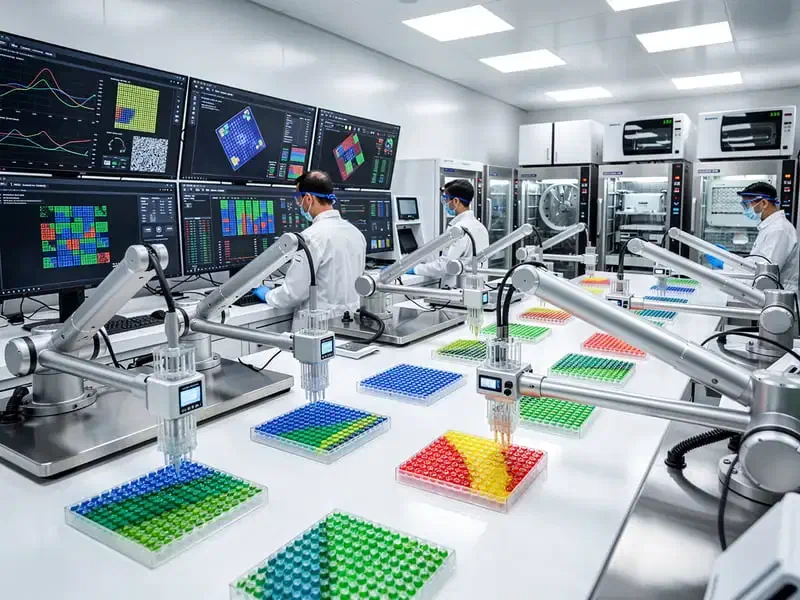
The workflow proceeds from library preparation to dispensing, reaction, detection, and data analysis, where software flags “hits” (compounds with significant reactivity) and generates dose-response data. This approach offers unmatched speed, cost-effectiveness, reproducibility, and scalability, making it ideal for applications in drug discovery, cosmetics, pesticides, and environmental chemical safety. Below is a diagram illustrating the workflow:
flowchart TD
    A[Library Preparation
    Test Compounds in Stock Plates] --> B[Dispensing
    Robotic Liquid Handling]
    C[Synthetic Molecules
    Peptides/Proteins/DNA] --> B
    B --> D[Reaction
    Microtiter Plates
    96/384/1536 wells]
    D --> E[Detection
    HPLC and
Spectrophotometers]
    E --> F[Data Analysis
    Software Identifies 'Hits'
or significant reactivity]
    F --> G[Output
    Reports for Validation]
HPLC (High Performance Liquid Chromatography) is an analytical technique used to separate, identify, and quantify components within a liquid mixture by passing it through a column packed with tiny particles (the stationary phase). As the mixture is forced through at high pressure, different components travel at varying speeds based on their interactions with the stationary phase, resulting in distinct separations. As each separated molecule exits the column, it is detected by a spectrophotometer, which measures light absorption to identify what the molecule is and how much is present, producing a readable graph called a chromatogram.
However, in HTS, the process often shifts from high-pressure columns to affinity capture. Instead of a packed column, the Target Protein (e.g., an enzyme or receptor) is coated on the bottom of a microtiter well, acting as the stationary phase. A library of drug candidates is added, and only the drugs that bind specifically to the target are retained while others wash away. A plate reader (a multi-well spectrophotometer) then measures the signal intensity to quantify the bound drugs, identifying potential hits without needing to separate thousands of compounds sequentially.
In Chemico HTS merges non-biological chemical testing with automated high-throughput technology to evaluate the reactivity and toxicity of thousands of compounds efficiently. The process relies on synthetic biological molecules (e.g., peptides, proteins, or DNA) that mimic natural targets, eliminating the need for live organisms or animal testing. By leveraging robotic liquid handling systems, test compounds and synthetic molecules are precisely dispensed into microtiter plates, where chemical reactions occur under controlled conditions. Advanced detection systems, such as HPLC or spectrophotometers, then measure reactivity endpoints, such as peptide depletion in assays like the Direct Peptide Reactivity Assay (DPRA).
High throughput screening (HTS) is a powerful, automated method used in drug discovery and biological research to rapidly test thousands to millions of chemical, biological, or genetic compounds for desired activity against a specific target. These compounds come from synthetic chemistry, natural sources, combinatorial methods, or computational design, with in silico approaches increasingly guiding the creation of novel, testable molecules.
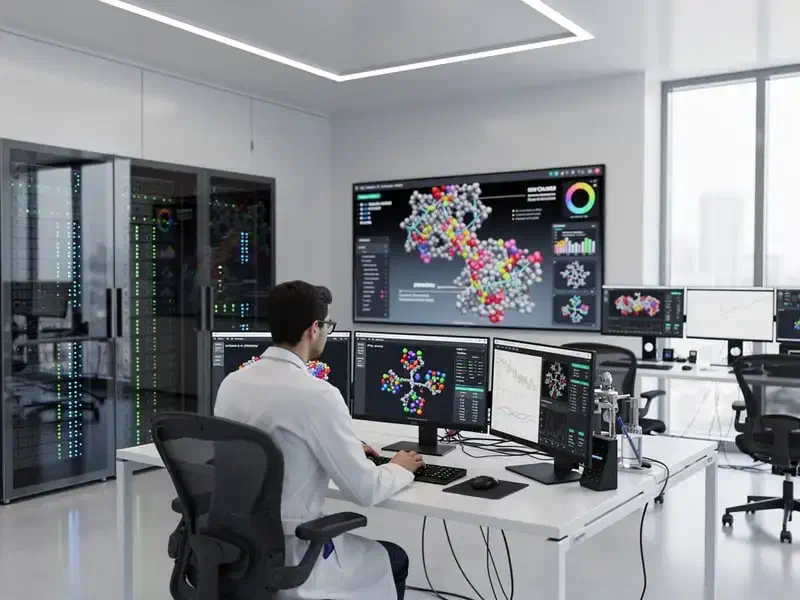
analyses of 3D molecular models and simulation data.
Credit: Mistral
What is In Silico #
In Silico methods use computational models and simulations to predict biological outcomes, drug behavior, and toxicity without relying on animal or traditional laboratory testing. Examples of such models are
- Physiologically Based Pharmacokinetic (PBPK): a computational method used in pharmacology and toxicology to predict how a substance, such as a drug or chemical, is absorbed, distributed, metabolized, and excreted (ADME) in the body.
- Quantitative Structure-Activity Relationship (QSAR): a computational method used in chemistry and biosciences to predict the activity of a molecule based on its chemical structure.
How do PBPK modeling and AI/ML improve drug discovery? #
Physiologically Based Pharmacokinetic (PBPK) modeling simulates how drugs are absorbed, distributed, metabolized, and excreted (ADME) in the human body components (such as organs and tissues), providing predictive insights into drug behavior without animal testing21.
Such processes can be quantified mathematically. As a very simple example, consider the concentration of a drug/toxin in a body that decreases over time. The following equation can model it:
$$ C(t) = C_0e^{-kt} $$\(C_0\) is the starting concentration of drug/toxin
\(e\) is Euler’s number about 2.72 used in growth/decay situations
\(k\) is just some constant number determined by experiment
\(t\) is time (e.g., seconds, hours, days)
\(C(t)\) is the concentration at a given time
As time goes on, \(t\) gets larger, therefore \(e^{-kt}\) gets smaller taking the right side down with it, giving a decreasing concentration \(C(t)\). One would expect this to be the case as the body clears out a foreign ‘intruder’. What goes on inside a physiological entity, can often be mathematically modelled and studied.
AI/ML (machine learning is a subset of artificial intelligence) enhance this process by analyzing vast datasets to identify patterns and predict outcomes, significantly improving the accuracy and efficiency of drug discovery22 23. These methods reduce reliance on animal models, which often fail to predict human responses due to species differences.
Why are In Silico methods more predictive than animal models? #
In Silico methods leverage human-specific data and computational power to model biological processes directly relevant to humans. Unlike animal models, which can produce misleading results due to inter-species differences, In Silico approaches are designed to reflect human physiology, leading to higher translational success rates. For example, PBPK modeling has been shown to predict drug metabolism and toxicity in humans with greater accuracy than animal tests, while AI-driven models can identify potential drug candidates or toxicities at unprecedented speeds24 25.
What cost savings are associated with In Silico methods compared to animal testing? #
In Silico methods, such as PBPK modeling and AI/ML-driven drug discovery, offer substantial cost savings compared to traditional animal testing. For instance, the average cost of bringing a drug to market is estimated at over $2.6 billion, with a significant portion attributed to animal testing and failed clinical trials due to poor animal-to-human translation26 27. In Silico methods reduce these costs by streamlining the drug development pipeline, minimizing false leads, and improving the predictive accuracy of preclinical research.
How does the In Silico process work? #
In Silico processes leverage computational models, simulations, and AI/ML to predict biological outcomes, drug behavior, and toxicity by analyzing chemical structures, physiological parameters, and biological data. The process is a follows:
flowchart TD
A[Input
Chemical/Biological Data]
A --> B[Model
PBPK/AI/ML/QSAR]
B --> C[Simulation
Drug-Target Interactions]
C --> D[Prediction
ADME/Toxicity/Efficacy]
D --> E[Output
Reports for
Drug Development]
Using models like PBPK and QSAR with ML, these methods simulate drug-target interactions, predict ADME properties, and assess safety, enabling faster, more accurate, and cost-effective evaluations compared to traditional animal testing28.
This video offers a beginner-friendly overview of in-silico drug discovery, explaining how small organic drug molecules like pantoprazole or diclofenac work by binding to and inhibiting specific target proteins—such as enzymes or receptors—in the body to treat diseases. It covers the basic mechanism of action of drugs, including how they interact with proteins like proton pumps or COX enzymes, and introduces key concepts such as pharmacokinetics (absorption, distribution, metabolism, and excretion) and computational methods like molecular modeling and virtual screening used in modern drug design.
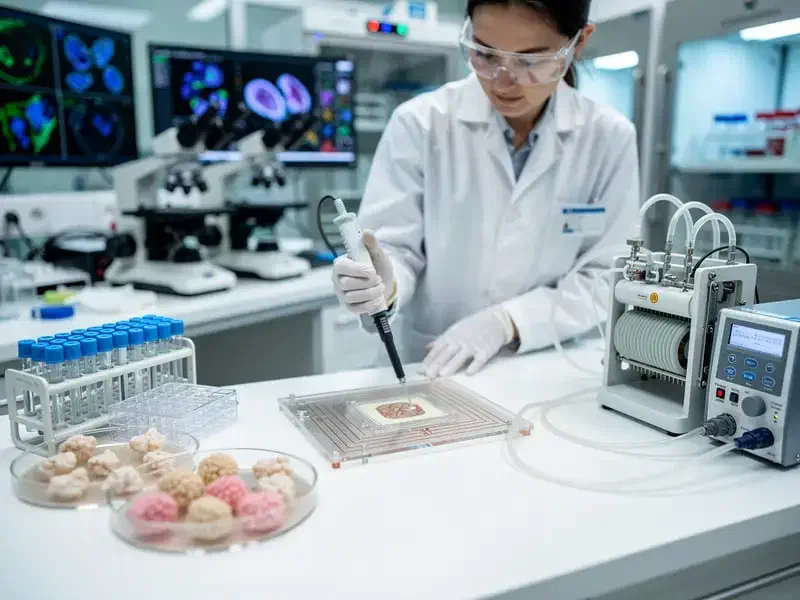
working on organ-on-a-chip and 3D organoids.
Credit: Mistral
What is In Vitro #
In vitro (“in the glass”) studies involve experiments conducted outside the normal biological context, typically using isolated cells or biological molecules. Often referred to as “test-tube experiments,” they are carried out in laboratory equipment like test tubes, flasks, Petri dishes, and microtiter plates. This approach allows for more detailed and convenient analysis compared to studying whole organisms29. The category includes organoids and organ-on-a-chip technologies.
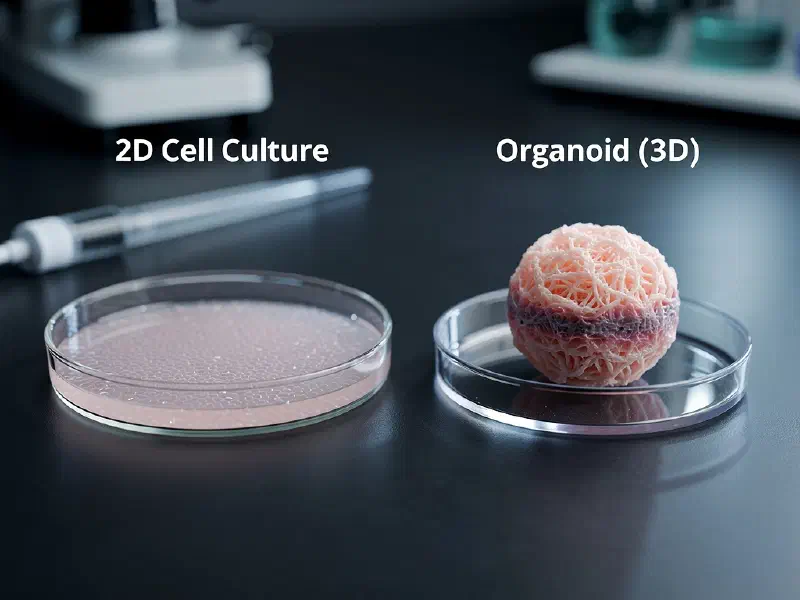
How do organoids differ from traditional 2D cell cultures? #
Organoids are 3D cell cultures that mimic the structure and function of human organs, providing a more physiologically relevant model than traditional 2D cultures. While 2D cultures lack the complex interactions and architecture of human tissues, organoids recapitulate tissue-specific microenvironments, enabling more accurate studies of disease mechanisms, drug responses, and developmental processes30 31.
Credit: Mistral
What is the difference between organoids and spheroids? #
Organoids are complex, self-organizing 3D structures derived from stem cells that mimic the architecture and function of real organs, while spheroids are simpler 3D cell aggregates formed from cell suspensions that typically consist of fewer cell types32 33.
What are some applications of organoids? #
Organoids have transformative applications across biomedical research, drug development, and personalized medicine, including34:
- Drug Testing and Toxicity Screening: Organoids provide human-relevant models for assessing drug efficacy, toxicity, and side effects, reducing reliance on animal testing and improving predictive accuracy for human responses.
- Disease Modeling: They enable the study of complex human diseases (e.g., cancer, neurodegenerative disorders, infectious diseases) by replicating the structure and function of affected organs, offering insights into disease mechanisms and potential treatments.
- Personalized Medicine: Patient-derived organoids allow for tailored therapies, enabling clinicians to test drug responses on a patient’s own cells before treatment, improving outcomes and reducing adverse effects.
- Developmental Biology: Organoids model human organ development, helping researchers understand genetic disorders and developmental defects.
- Regenerative Medicine: They hold potential for tissue repair and organ replacement, with ongoing research into using organoids for transplantation and restoring damaged tissues.
- Infectious Disease Research: Organoids are used to study pathogen interactions with human tissues, accelerating the development of treatments for viral and bacterial infections.
- Cancer Research: Tumor organoids replicate patient-specific cancers, enabling the testing of therapies and the identification of biomarkers for targeted treatments.
- Organ-on-a-Chip Integration: Combining organoids with microfluidic systems enhances their functionality, enabling dynamic studies of drug metabolism, disease progression, and inter-organ interactions.
Aku Sika’s video offers a clear and visual introduction to brain organoids, describing how they are grown from stem cells to model the human brain for research. It explains their structure, development, and use in studying neurological diseases and testing treatments, emphasizing their value in neuroscience despite limitations in fully replicating a complete human brain .
How is an organ-on-a-chip constructed? #
An organ-on-a-chip is a microfluidic device constructed using biocompatible materials like polydimethylsiloxane (PDMS) or glass, produced through microfabrication techniques such as soft lithography or photolithography. The device features microscale channels and chambers that replicate the architecture and microenvironment of human organs. These microchannels are lined with human-derived cells (e.g., liver, lung, or heart cells) and often incorporate an extracellular matrix (ECM) to support cell adhesion, growth, and differentiation, creating a functional, tissue-like structure35.
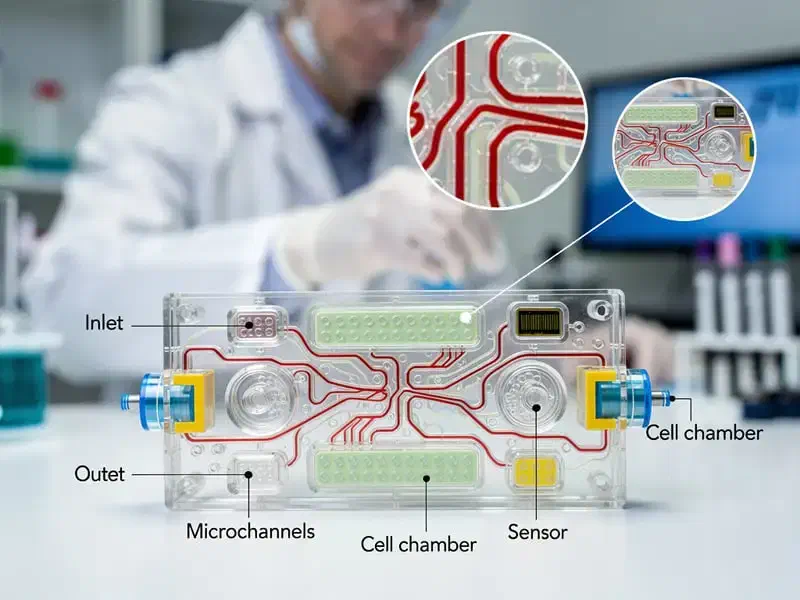
Credit: Mistral
This Emulate Inc video highlights the Chip-S1® Stretchable Chip, which replicates the dynamic microenvironment of human organs to advance cancer research and drug development. It emphasizes how this organ-on-a-chip technology mimics tissue-tissue interactions and mechanical forces found in the body, enabling more accurate studies of human physiology and disease responses than traditional models. The platform aims to improve preclinical testing by providing a comprehensive, human-relevant system that could reduce reliance on animal testing and accelerate therapeutic discovery.
What are some applications of organ-on-a-chip technology? #
Organ-on-a-chip technology are microfluidic systems having diverse and transformative applications across biomedical research, drug development, and toxicology, including36:
- Drug Development and Testing: Enables high-throughput screening of drug candidates for efficacy, toxicity, and pharmacokinetics in a human-relevant microenvironment, reducing reliance on animal models and improving translational success.
- Disease Modeling: Replicates human organ physiology and pathology (e.g., liver toxicity, lung fibrosis, heart disease) to study disease mechanisms and test potential therapies in a controlled, dynamic setting.
- Personalized Medicine: Allows for patient-specific testing by integrating a patient’s cells into the chip, enabling tailored drug responses and treatment optimization.
- Toxicity Testing: Assesses the safety of chemicals, cosmetics, and environmental toxins with greater human relevance than traditional animal or 2D cell culture tests.
- Multi-Organ Systems (“Body-on-a-Chip”): Links multiple organ chips (e.g., liver, heart, kidney) to study inter-organ interactions, drug metabolism, and systemic effects, providing a holistic view of human physiology.
- Infectious Disease Research: Models pathogen-host interactions (e.g., viral/bacterial infections) to study disease progression and test antimicrobial therapies.
- Regenerative Medicine: Supports the development of tissue engineering strategies by testing how stem cells or bioengineered tissues respond to mechanical and biochemical cues.
- Mechanistic Studies: Provides insights into organ-level physiological processes, such as fluid flow, mechanical forces, and cellular responses, that are difficult to study in traditional models.
Cleo Abram discusses how “organ-on-a-chip” technology could revolutionize drug testing by reducing reliance on animal testing. Over 115 million animals are used annually in testing, the FDA no longer requires animal trials before human drug trials. Organ-on-a-chip devices are tiny 3D cell cultures that mimic human organs, allowing researchers to test drugs in a more human-relevant environment. Emulate, a company in this field, used a liver-on-a-chip to identify 87% of drugs that caused liver toxicity in humans—drugs that had previously passed animal tests. This suggests the technology not only reduces animal testing but may also improve human safety and accuracy in drug screening.
This “heart on a chip” technology could one day save lives by simulating how blood flows through patient-specific artery structures. Scientists created it by scanning arteries from real patients with varying degrees of disease, generating 3D images, and printing them onto glass to build accurate replicas on a chip. By pumping fluid through these models, researchers can observe blood clot formation in real time—shown as white areas—and have discovered that clots form not only due to artery narrowing but also because of how an artery’s unique shape affects blood flow. The goal is to use these chips to develop personalized treatments and new drugs.
Credit: Mistral
What is Bioprinting? #
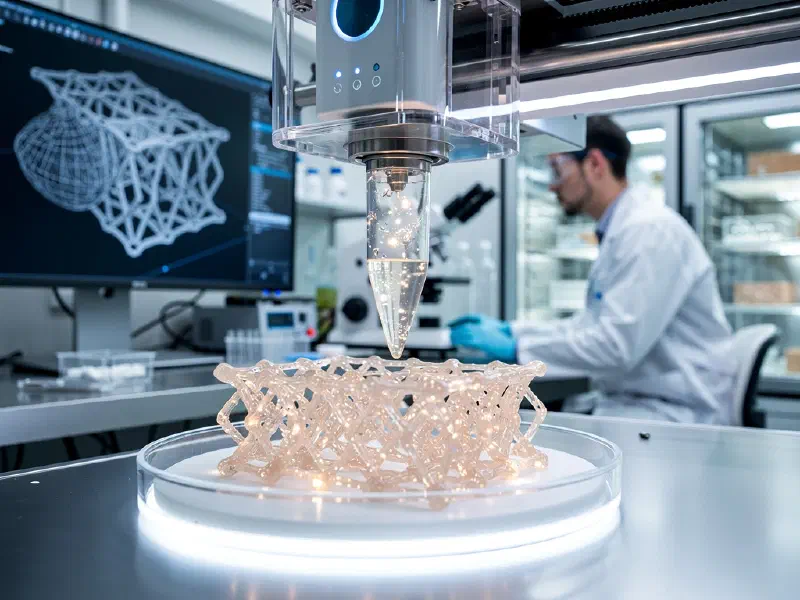
Bioprinting uses bioinks which are mixtures of living cells and biocompatible hydrogels (natural or synthetic hydrophilic polymer chains), to fabricate functional, three-dimensional human tissue structures layer by layer. By precisely depositing these cell-laden materials, bioprinting enables the creation of complex, organ-like architectures that closely mimic native human tissues, making it a transformative technology for tissue engineering, drug testing, and regenerative medicine37.
How is bioprinting related to 3D printing? #
Bioprinting is a specialized form of 3D printing. While traditional 3D printing creates objects from materials like plastic or metal, bioprinting builds living tissues layer by layer, enabling the creation of complex, human-like models for research and medical applications.
What is the process of bioprinting? #
Bioinks are 3D printed in layers to create tissues, that mature in a bioreactor, and then is available for testing or even transplantation38 39.
flowchart TD
    A[Pre-Bioprinting
Medical Imaging
Model Design]
	A--> B[Bioink Preparation
Cells + Biomaterials]
    B --> C[Bioprinting
Layer-by-Layer Deposition]
    C --> D[Post-Bioprinting
Maturation in Bioreactor]
    D --> E[Functional Tissue
Ready for Testing
 and Implantation]
What are some key applications of bioprinting in biomedical research? #
Bioprinting has transformative applications in biomedical research, including40:
- Tissue Engineering: Creates functional human tissues (e.g., skin, cartilage, liver) for transplantation, addressing the global shortage of donor organs.
- Drug Testing and Toxicity Screening: Enables high-throughput, human-relevant testing of drug efficacy, toxicity, and pharmacokinetics, reducing reliance on animal models and improving predictive accuracy.
- Regenerative Medicine: Supports the repair or replacement of damaged tissues (e.g., heart patches, bone scaffolds) by printing patient-specific constructs that integrate with the body.
- Disease Modeling: Replicates complex human diseases (e.g., cancer, neurodegenerative disorders) to study mechanisms and test therapies in a controlled, 3D environment.
- Cancer Research: Facilitates the creation of patient-specific tumor models for studying cancer biology and testing personalized treatments.
- Pharmaceutical Development: Accelerates drug discovery by enabling rapid, scalable production of human tissue models for screening large compound libraries.
- Personalized Medicine: Allows for patient-specific tissue models to test drug responses and optimize treatments before clinical use.
- Organ Transplantation: Holds long-term potential for full organ fabrication (e.g., kidneys, livers) to address organ shortages and reduce transplant rejection risks.
The video showcases the process of 3D bioprinting human tissues and organs at the Biomodeling & Biomeasurements Lab, highlighting a low-cost, in-house-built quad-extension bioprinter developed at Stevens Institute of Technology using commercial resin printers. This innovative approach enables the creation of 3D-printed constructs that mimic real tissue and organs, advancing research in regenerative medicine and biomedical engineering . The technology holds promise for future medical applications, including organ transplants and personalized medicine, by offering a scalable and affordable solution for bioprinting complex biological structures.
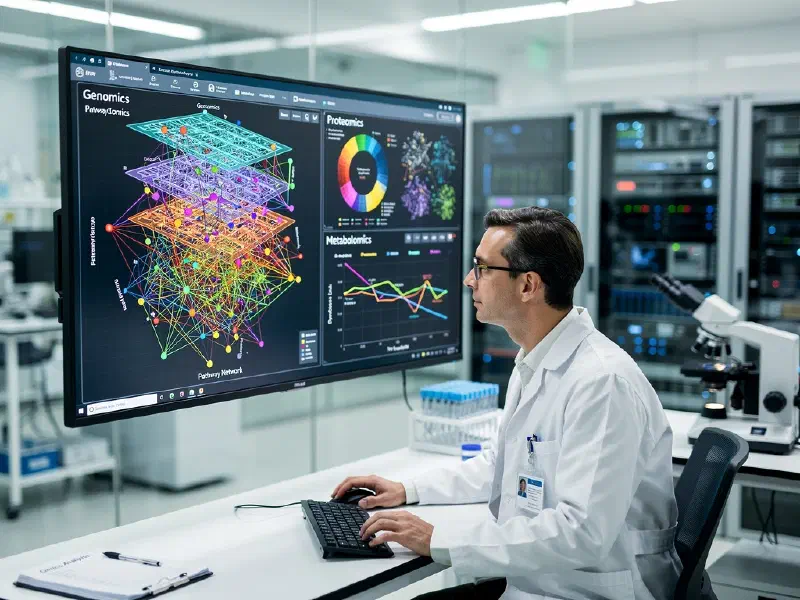
genomic, proteomic, and metabolomic data into a dynamic digital model.
Credit: Mistral
What are the main components of Omics technologies? #
Omics technologies include genomics (study of DNA), transcriptomics (study of RNA), proteomics (study of proteins), and metabolomics (study of metabolites). Each component provides a systems-level understanding of biological processes, enabling researchers to analyze the complex interactions that drive health and disease41.
What are some applications of omics technology? #
Omics technologies have broad and impactful applications across biomedical research, healthcare, and beyond, including42:
- Personalized Medicine: Enables tailored treatments based on an individual’s genomic, proteomic, or metabolomic profile, improving efficacy and reducing adverse effects.
- Drug Discovery and Development: Accelerates target identification, lead optimization, and toxicity screening by analyzing molecular pathways and drug interactions at a systems level.
- Disease Diagnosis and Prognosis: Identifies biomarkers for early detection, risk assessment, and monitoring of diseases like cancer, diabetes, and neurodegenerative disorders.
- Understanding Disease Mechanisms: Provides insights into molecular pathways and biological networks, revealing how genetic, protein, and metabolic changes contribute to disease.
- Digital Twins: Creates virtual models of patients using multi-omics data to simulate and predict responses to treatments, enabling precision medicine.
- Toxicology and Safety Assessment: Evaluates chemical safety and mechanisms of toxicity using omics data to replace or reduce animal testing.
- Systems Biology: Maps complex biological interactions to understand how cells, tissues, and organs function as integrated systems.
- Agriculture and Environmental Science: Improves crop traits, disease resistance, and sustainability by studying plant and microbial omics.
- Microbiome Research: Analyzes microbial communities and their role in human health, disease, and drug metabolism.
- Regenerative Medicine: Supports stem cell research and tissue engineering by understanding cellular differentiation and tissue development.
How does Omics enable systems biology and personalized medicine? #
Omics technologies provide a holistic view of biological systems43, allowing researchers to identify biomarkers, understand disease mechanisms, and develop targeted therapies. For example, genomics can reveal genetic mutations linked to diseases, while proteomics can identify protein targets for drug development. This systems-level approach is the foundation of personalized medicine, where treatments are tailored to an individual’s unique biological profile. Omics also enables the development of digital twins - virtual models of a patient’s physiology that can be used to simulate and optimize treatments44.
What are digital twins? #
Digital twins are virtual replicas of biological systems or patients that use real-time data, computational models, and simulations to replicate and predict the behavior of their physical counterparts. In healthcare, these digital representations integrate multi-scale, dynamic data from molecular interactions to organ-level physiology, to create a personalized, evolving model that can simulate physiological responses, disease progression, and treatment outcomes without direct human or animal testing45. The technology is deeply intertwined with omics, as it relies on genomic, proteomic, metabolomic, and other omics datasets to build and refine these virtual models. By incorporating omics data, digital twins capture the complex, interconnected biological networks that drive health and disease, enabling P4 medicine (Predicitive, Preventive, Personalized, Participatory) using diagnostics and virtual clinical trials that improve patient-specific outcomes while reducing reliance on traditional testing methods46.
Hannah Fry interviews Joelle Barral about the potential of digital twins which are virtual replicas of organs or even humans, to accelerate medical research and the future of health.
This video, The Future of Precision Medicine: Digital Twins, Multi-Omics & AI, is an episode of The Helix Exchange podcast with Dr. Chase Spurlock, CEO of Decode Health, discussing the future of precision medicine through the integration of genomics, multi-omics data, and artificial intelligence, emphasizing how advanced data platforms can transform diagnostics and drug discovery.
Talking Point Printout #
This Talking Point is available in modified form for download right here.
References #
-
Animal Welfare Institute, NAM Techniques: In Chemico (chemial analysis)
In in chemico non-animal methods (NAMs), the Animal Welfare Institute promotes replacing animal testing with sophisticated chemical analyses that evaluate substance toxicity through direct interaction with biological components like cells, tissues, or biofluids, rather than whole living organisms. This approach relies on advanced analytical chemistry and bioassays to measure specific biological responses and mechanisms of action, providing data on toxicity, absorption, and metabolism with greater precision, speed, and ethical compliance than traditional animal models. ↩︎ -
Lee M, Hwang J, Lim K, Alternatives to In Vivo Draize Rabbit Eye and Skin Irritation Tests with a Focus on 3D Reconstructed Human Cornea-Like Epithelium and Epidermis Models, Toxicol Res, 2017
The article reviews alternatives to the traditional in vivo Draize rabbit test for eye and skin irritation, emphasizing the development and application of 3D reconstructed human cornea-like epithelium and epidermis models as more ethical and predictive in vitro substitutes that reduce animal use while maintaining regulatory relevance. ↩︎ -
MeasureLabs, Direct peptide reactivity assay (DPRA) according to OECD 442C
This resource describes the Direct Peptide Reactivity Assay (DPRA), a standardized in vitro method (OECD 442C) that measures the reactivity of chemicals with synthetic peptides to screen for electrophilic compounds capable of protein binding, serving as a key early step in the tiered approach for identifying potential skin sensitizers. ↩︎ ↩︎ -
Wikipedia, High-throughput screening
High-throughput screening (HTS) is an automated experimental technique used in drug discovery and toxicology to rapidly evaluate large libraries of compounds against biological or chemical targets, enabling the efficient identification of active agents and the generation of extensive datasets for risk assessment. ↩︎ -
Wikipedia, In silico
This term is widely used in fields like bioinformatics and computational biology to describe the use of computer models to study biological systems, predict outcomes, or analyze large datasets without direct physical experimentation, thereby reducing costs, time, and ethical concerns associated with traditional lab methods. ↩︎ -
Ward A., In Silico Pharmacokinetic Prediction: Integrating AI, PBPK, and Machine Learning for Modern Drug Development, MediChem Insights, 2025
In silico pharmacokinetic prediction represents a paradigm shift in drug development by synergizing Artificial Intelligence, Physiologically Based Pharmacokinetic (PBPK) modeling, and Machine Learning to forecast how drugs are absorbed, distributed, metabolized, and excreted. This integrated approach moves beyond traditional empirical methods by leveraging vast datasets and advanced algorithms to simulate complex biological systems, thereby enhancing the accuracy of toxicity and efficacy predictions early in the discovery pipeline while significantly reducing costs, time, and the need for extensive animal testing. ↩︎ -
Water Resilience, In Silico Modelling and Drug Discovery
In silico modeling serves as a critical tool for reconstructing the physiological states of diseases, enabling researchers to decipher pathophysiology and forecast treatment efficacy before clinical trials. By simulating drug behavior, these models predict effectiveness and potential adverse reactions with remarkable speed, offering a cost-efficient alternative to traditional in vitro and in vivo experimentation. This predictive capability significantly accelerates the research pipeline, allowing for the early identification of viable therapeutics while minimizing the time and financial resources required for subsequent physical testing. ↩︎ -
Animal Welfare Institute, New Computer Algorithm Could Replace Animal Tests—and Be Better at It
A new computer algorithm developed to predict how animals will react to drugs could potentially replace animal testing, offering a more efficient and accurate alternative for pharmaceutical research. By simulating biological responses, this computational approach aims to reduce the ethical concerns and costs associated with traditional animal testing while improving the reliability of drug development processes. ↩︎ -
Wikipedia, In vitro
The term describes scientific techniques where biological processes are conducted outside of a living organism, typically within controlled laboratory environments such as test tubes, petri dishes, or cell cultures. This approach allows researchers to isolate specific biological systems to study their responses to drugs, chemicals, or genetic changes without the confounding variables present in whole organisms, serving as a foundational alternative to animal and human testing in fields like pharmacology and toxicology. ↩︎ -
CLRN Team, What is an in vitro study?, California Learning Resource Network, 2025
An in vitro study involves observing biological processes or chemical reactions outside of a living organism, typically within controlled laboratory settings like test tubes or petri dishes. This method isolates specific components such as cells, tissues, or enzymes to analyze their behavior, growth, or response to substances, providing precise data without the complexity of a whole living system. Widely used in pharmaceutical research and toxicology, in vitro studies serve as a foundational alternative to animal testing, offering ethical advantages and the ability to conduct highly targeted experiments that would be impossible or impractical in vivo. ↩︎ -
Wikipedia, 3D bioprinting
This is an advanced additive manufacturing technique that constructs functional biological structures layer-by-layer using bio-inks containing living cells, growth factors, and biomaterials. Unlike traditional tissue engineering methods, this technology enables the precise spatial arrangement of cells to mimic the complex microarchitecture and physiological gradients of native human tissues and organs. By creating intricate 3D models such as skin, cartilage, and vascularized tissue, bioprinting offers a superior alternative to animal testing for drug discovery and toxicity screening, providing more accurate predictions of human biological responses while significantly reducing ethical concerns and costs. ↩︎ -
Selvakumar, M., Dhanasekar, J., Nandhakumaran, S. et al., 3D bioprinting: current status and future prospects in tissue and organ regeneration, Futur J Pharm Sci, 12(58), 2026
This review article outlines the current state and future potential of 3D bioprinting in tissue and organ regeneration, emphasizing its transition from theoretical concepts to practical clinical applications. The authors highlight how advanced bio-inks and multi-material printing techniques now allow for the fabrication of complex, vascularized structures that closely mimic native human physiology, offering a superior alternative to animal models for drug testing and disease modeling. They argue that while challenges in scalability, long-term viability, and regulatory approval remain, 3D bioprinting holds the promise of revolutionizing regenerative medicine by enabling personalized, patient-specific organ repair and reducing ethical concerns associated with animal experimentation. ↩︎ -
SilicoGene, Omics Explained: A Comprehensive Overview
Omics represents a collective suite of high-throughput molecular profiling technologies that analyze biological systems at a comprehensive scale, encompassing genomics, transcriptomics, proteomics, metabolomics, and epigenomics. By systematically measuring and interpreting vast datasets of biomolecules, these methods reveal the intricate interactions and regulatory networks underlying cellular function, disease mechanisms, and individual responses to therapies. This holistic approach enables researchers to move beyond single-gene studies to understand complex biological phenomena, facilitating the development of personalized medicine and providing more predictive models for drug testing that reduce the reliance on animal experimentation. ↩︎ -
Wen, J., Towards a multi-organ, multi-omics medical digital twin, Nat. Biomed. Eng 9, 1386–1389, 2025
This commentary advocates for the development of “medical digital twins”—integrated computational models that simulate the physiological and molecular dynamics of a whole human body by combining multi-organ-on-chip systems with multi-omics data. By creating a virtual replica of an individual’s biology, these digital twins can predict how specific drugs or diseases will affect unique physiological systems, offering a precise, ethical alternative to animal testing that accounts for human genetic and metabolic variability. The authors argue that converging organ-level mechanical data with genome, transcriptome, and metabolome profiles will revolutionize personalized medicine, allowing for safer drug development and reduced reliance on non-human animal models. ↩︎ -
AccuraScience, NAMs Are No Longer Optional. You Need to Act - But You’re Not Alone
The NIH’s recent strategic emphasis on Non-Animal Methods (NAM) signals a decisive shift toward making these alternatives mandatory rather than optional in biomedical research. This policy evolution, driven by ethical imperatives and the urgent need to reduce animal use, is supported by a growing ecosystem of validated computational models, microphysiological systems, and advanced data science tools. The article reassures researchers that they are not navigating this transition alone, highlighting the availability of NIH resources, funding opportunities, and collaborative networks designed to accelerate the adoption of NAMs and ensure a smoother, more effective transition away from traditional animal testing. ↩︎ -
McCarthy J, Bailey J, Baron R, Krebs CE, Singer M, Baker E, et al., Creating training opportunities in new approach methodologies for early-career researchers, NAM Journal, 2025
This article emphasizes the critical need to integrate New Approach Methodologies (NAM) into the training curriculum of early-career researchers to ensure the successful future of biomedical science. Recognizing a significant skills gap, the authors propose structured educational programs, workshops, and mentorship opportunities designed to equip the next generation of scientists with the expertise to design, validate, and interpret data from non-animal models like organ-on-chip systems, advanced in silico simulations, and multi-omics approaches. By proactively updating training frameworks, the scientific community can accelerate the adoption of ethical, human-relevant testing methods and reduce reliance on animal experimentation in research and development. ↩︎ -
CITI Program, U.S. and Global Trends in Research Involving Non-Animal Models, 2026
This report highlights the accelerating global shift toward Non-Animal Models (NAM), driven by ethical mandates, regulatory pressures, and the superior predictive validity of these methods over traditional animal testing. It details rising adoption rates in the U.S. and internationally, spurred by the NIH’s Modernization Act and funding incentives that prioritize human-relevant data. The analysis underscores that NAMs—including advanced in silico models, microphysiological systems, and organoids—are no longer experimental curiosities but essential components of modern drug discovery, promising to reduce research costs, improve clinical trial success rates, and eliminate the ethical complications of animal experimentation. ↩︎ -
IIVS, Direct Peptide Reactivity Assay (DPRA, OECD 442C), Institute for In Vitro Sciences, Inc.
DPRA is a standardized in vitro method (OECD 442C) used to screen chemicals for their potential to cause skin sensitization by measuring their ability to covalently bind to synthetic peptides that mimic skin proteins. By quantifying the depletion of these peptides after exposure to a test substance, the DPRA identifies reactive chemicals early in the development process, serving as a critical first tier in the iterative testing strategy (I-Think) that replaces the traditional guinea pig assay. This approach significantly reduces animal use while providing a human-relevant, high-throughput mechanism to predict allergic contact dermatitis risks in cosmetic and pharmaceutical industries. ↩︎ -
Basketter DA, Gerberick GF, Skin Sensitization Testing: The Ascendancy of Non-Animal Methods, Cosmetics, 2022
This article argues that Non-Animal Methods (NAM) have transitioned from supplementary tools to the primary standard for detecting skin sensitization, driven by the ethical imperative to end animal testing such as the Buelher occluded patch test (BL), and the guinea pig maximization test (GPMT), as well as the superior human relevance of these assays. The authors detail how the iterative testing strategy (I-Think), which combines in vitro assays like the DPRA and h-CLAT with computational modeling, now offers a regulatory-accepted, tiered approach that is more predictive, faster, and cheaper than traditional animal models. By eliminating interspecies variability, these human-relevant methods provide clearer safety data for the cosmetics and pharmaceutical industries, fundamentally shifting the paradigm of toxicological risk assessment. ↩︎ -
Cytiva, High-throughput screening: from hit identification to lead selection, Cytiva Life Sciences.
HTS is an automated methodology that rapidly tests thousands to millions of chemical compounds against a specific biological target to identify “hits” with desired activity. While traditionally reliant on in vitro models like cell cultures, HTS is increasingly being redesigned to incorporate advanced non-animal models, such as 3D cell aggregates and microphysiological systems, to improve the predictive power of early-stage drug discovery. This evolution allows researchers to filter out non-viable candidates earlier with greater accuracy, reducing attrition rates in later clinical phases and minimizing the need for animal testing by ensuring only the most promising, human-relevant leads advance to further development. Both speed and quality are greatly improved. ↩︎ -
Ozbek O., et al., Advances in Physiologically Based Pharmacokinetic (PBPK) Modeling of Nanomaterials, ACS Pharmacology & Translational Science, 2024
This review article outlines the evolution of Physiologically Based Pharmacokinetic (PBPK) modeling specifically for nanomaterials, detailing how these computational tools simulate the absorption, distribution, metabolism, and excretion (ADME) of nanoparticles within the human body. By incorporating advanced mathematical representations of organ physiology and nanomaterial-specific properties like size, shape, and surface chemistry, PBPK models predict tissue concentrations and potential toxicity without requiring animal testing. The authors highlight recent methodological advances that improve the accuracy of these simulations, positioning them as a powerful in silico alternative to traditional animal studies for assessing nanomedicine safety and optimizing dosing strategies. ↩︎ -
PubMed, Human In Silico Drug Trials Demonstrate Higher Accuracy than Animal Models in Predicting Clinical Pro-Arrhythmic Cardiotoxicity, PubMed, 2017
This landmark study provides empirical evidence that in silico human models, specifically the CiPA (Comprehensive in vitro Proarrhythmia Assay) initiative, outperform traditional animal models in predicting drug-induced cardiac arrhythmias. By combining human ion channel data with computational heart cell models, the study demonstrated that in silico trials could more accurately identify the risk of pro-arrhythmic effects (such as Torsades de Pointes) than standard animal toxicity tests, which often fail to predict human-specific responses due to species differences. The findings support the adoption of human-relevant computational approaches as a superior, ethical, and cost-effective method for early-stage drug safety assessment, potentially eliminating the need for animal testing in cardiotoxicity screening. ↩︎ -
IntuitionLabs, AI Predictive Tools and Animal-Free Drug Discovery, 2025
This article outlines how artificial intelligence (AI) and machine learning are revolutionizing drug discovery by enabling fully animal-free testing pipelines. By training algorithms on vast datasets of in silico simulations, in vitro results, and clinical outcomes, AI predictive tools can accurately forecast drug efficacy, toxicity, and pharmacokinetics before any wet-lab or animal experimentation occurs. The integration of these technologies not only accelerates the identification of viable drug candidates but also significantly reduces reliance on animal models, offering a more ethical, cost-effective, and human-relevant approach to bringing new medicines to market. ↩︎ -
Passini E, Britton OJ, et al., Human In Silico Drug Trials Demonstrate Higher Accuracy than Animal Models in Predicting Clinical Pro-Arrhythmic Cardiotoxicity, Frontiers in Physiology, 2017
This study provides robust evidence that human in silico drug trials, specifically the Comprehensive in vitro Proarrhythmia Assay (CiPA) initiative, outperform traditional animal models in predicting pro-arrhythmic cardiotoxicity. By integrating human-specific ion channel data with computational cardiac cell models, the research demonstrated that these virtual trials can more accurately identify the risk of lethal heart rhythm disturbances, such as Torsades de Pointes, which animal models often fail to predict due to species-specific physiological differences. The findings validate the superiority of human-relevant computational approaches for early-stage safety assessment, suggesting they can serve as a more ethical, reliable, and cost-effective alternative to animal testing in cardiotoxicity screening. ↩︎ -
Prasad SK, Vishwanath PM, In silico alternatives to animal testing: Emerging trends in drug discovery, International Journal of Health & Allied Sciences, 2025
The article reviews computational approaches that are increasingly replacing animal models in drug discovery, emphasizing the use of in silico techniques such as molecular docking, molecular dynamics simulations, and machine learning to predict drug-target interactions and toxicity early in the development pipeline. By leveraging these methods, researchers can accelerate screening processes, reduce ethical concerns associated with animal testing, and lower the costs and time required to bring new therapeutics to market, marking a significant shift toward more humane and efficient biomedical research paradigms. ↩︎ -
Humane World, Costs of animal and non-animal testing
This report analyzes the financial implications of animal versus non-animal testing methods, arguing that while initial in silico and in vitro approaches may require upfront investment in technology and expertise, they ultimately offer significant long-term cost savings compared to the extensive expenses associated with breeding, housing, and monitoring animal subjects. The article highlights that non-animal alternatives can reduce regulatory timelines and trial failures by providing earlier, more accurate toxicity predictions, thereby enabling pharmaceutical companies to allocate resources more efficiently and avoid the high costs of late-stage clinical attrition caused by poor animal model predictive validity. ↩︎ -
Forbes, The Truly Staggering Cost Of Inventing New Drugs
This striking article breaks down the immense financial burden of bringing a new drug to market, estimating the total cost to reach the U.S. market at over $2 billion (some as high as $12 billion) when accounting for the full pipeline, including failed candidates. It highlights that a significant portion of these expenses is attributable to the high failure rate in clinical trials and the need to compensate for unsuccessful projects, illustrating why pharmaceutical companies are increasingly motivated to adopt cost-effective in silico and in vitro screening methods that can identify non-viable compounds earlier and reduce the staggering financial losses associated with late-stage trial failures. ↩︎ -
Chen X, Lin Z, Integration of Machine Learning With PBPK and QSAR Modeling Approaches to Facilitate Drug Discovery and Development, CPT Pharmacometrics & Systems Pharmacology, 2026
This article proposes a synergistic framework that integrates machine learning with Physiologically Based Pharmacokinetic (PBPK) and Quantitative Structure-Activity Relationship (QSAR) modeling to enhance early drug discovery and development. By leveraging machine learning to refine parameter estimation in PBPK models and optimize QSAR predictions, the approach aims to improve the accuracy of predicting drug absorption, distribution, metabolism, excretion, and toxicity (ADMET) profiles. This integration facilitates more reliable virtual screening and reduces the reliance on empirical animal testing, ultimately accelerating the identification of safe and effective drug candidates while lowering development costs and risks. ↩︎ -
Cerulean, Unlocking the Potential: Advantages of In Vitro Research over In Vivo Studies, 2024
This article by Cerulean argues that in vitro research offers distinct advantages over in vivo studies, primarily through superior control over experimental variables and the ability to isolate specific biological mechanisms without the complexity of whole-organism interactions. By utilizing cell cultures and isolated tissues, researchers can achieve higher throughput, lower costs, and faster iteration cycles compared to animal models, while also eliminating ethical concerns and reducing the time required to obtain regulatory approvals. The piece emphasizes that these controlled environments enable more precise toxicology screening and mechanistic elucidation, positioning in vitro methods as a critical, efficient first line of defense in modern drug discovery pipelines. ↩︎ -
Mameishvili K, 3D Organoids vs 2D Cell Lines in Drug Discovery and Disease Modeling, FutureLab, 2025
The article contrasts traditional 2D cell cultures with the emerging paradigm of 3D organoids, arguing that organoids provide a far more physiologically relevant model for drug discovery and disease modeling by mimicking the complex spatial architecture, cellular heterogeneity, and tissue-specific microenvironments of human organs. While 2D monolayers remain useful for high-throughput screening, they often fail to recapitulate critical drug responses, toxicity profiles, and disease progression observed in humans; 3D organoids bridge this gap by offering enhanced predictive validity, thereby reducing the need for animal testing and accelerating the translation of therapeutic findings from bench to bedside. ↩︎ -
Creative Biolabs, Organoids vs. Cell Culture: Choosing the Right In Vitro Model for Your Research
This article guides researchers in selecting the appropriate in vitro model by contrasting the limitations of standard 2D cell cultures with the physiological fidelity of 3D organoids. It highlights that while 2D cultures offer simplicity and high throughput, they often fail to replicate the complex tissue architecture, cell-cell interactions, and drug responses seen in human biology, leading to poor translational success. Conversely, organoids provide a more accurate disease model that better predicts toxicity and efficacy, making them indispensable for reducing animal testing and improving the success rate of drug discovery, though the choice ultimately depends on balancing research needs, cost, and available resources. ↩︎ -
Logos Biosystems, 3D Cell Culture: Differences Between Spheroids and Organoids and Their Analytical Strategies
The article delineates the technical distinctions between 3D spheroids and organoids, clarifying that while spheroids are self-organized aggregates of a single cell type useful for basic toxicity and efficacy screening, organoids are derived from stem cells to recapitulate the complex multi-cellular architecture and tissue-specific functions of human organs. It emphasizes that this physiological maturity makes organoids superior for predicting human drug responses and reducing animal testing, yet notes that spheroids remain a cost-effective, high-throughput option for initial screening when full organoid complexity is unnecessary, advocating for a tiered approach where analytical strategies match the specific research goals. ↩︎ -
Pedia, What is the Difference Between Organoids and Spheroids, 2023
The guide clarifies the fundamental differences between spheroids and organoids, defining spheroids as simple, spherical aggregates of cells primarily used for high-throughput toxicity screening and basic mechanistic studies, whereas organoids are complex, stem-cell-derived 3D structures that self-organize to mimic the specific architecture, cell diversity, and physiological functions of real human organs. The article underscores that while spheroids offer a cost-effective and rapid alternative to animal models, organoids provide superior predictive validity for drug response and disease modeling, making them increasingly critical for reducing reliance on in vivo testing and improving the translational success of pharmaceutical research. ↩︎ -
Yang S, Hu H, Kung H, Zou R, Dai Y, Hu Y, et al., Organoids: The current status and biomedical applications, MedComm (2020), 2023
This is a comprehensive review outlining the rapid evolution of organoids from simple stem cell aggregates to sophisticated, multi-organ systems that recapitulate human physiology with remarkable fidelity. It details their diverse biomedical applications, including high-fidelity disease modeling, personalized medicine, and toxicology screening, demonstrating their capacity to predict human drug responses more accurately than traditional 2D cultures or animal models. By highlighting how organoids can mimic complex tissue interactions and pathological states, the article positions them as a transformative tool for replacing animal testing, accelerating drug discovery, and bridging the translational gap between preclinical research and clinical outcomes. ↩︎ -
Ying-Jin S, Yuste I, et al., Fabrication of organ-on-a-chip using microfluidics, Bioprinting, 2025
This paper details the fabrication of “organ-on-a-chip” devices using advanced microfluidics to create dynamic, human-relevant models that mimic the fluid shear stress, mechanical forces, and cellular crosstalk found in native organs. By integrating living cells within micro-scale channels, these platforms offer a more physiologically accurate environment than static 2D cultures or animal models, enabling researchers to study complex drug interactions, toxicity, and disease progression in real-time while significantly reducing the ethical and financial burden of in vivo testing. ↩︎ -
Farhang DN, Srivastava S, A Comprehensive Review of Organ-on-a-Chip Technology and Its Applications, Biosensors (Basel), 2024
The paper provides a comprehensive review of organ-on-a-chip technology, summarizing its rapid evolution from simple microfluidic devices to complex multi-organ systems capable of modeling systemic human physiology. The article highlights applications in personalized medicine, high-throughput drug screening, and toxicology, emphasizing how these chips can predict human responses more reliably than animal models by replicating specific tissue architectures and microenvironments, thereby accelerating the development of safer and more effective therapeutics. ↩︎ -
Mendoza-Cerezo L, et al., Evolution of bioprinting and current applications, Int J Bioprint, 2023
The researchers trace the evolution of bioprinting from early prototyping to sophisticated 3D tissue engineering techniques used to create functional organ models and drug testing platforms. The review outlines current applications where bioprinting enables the precise spatial arrangement of multiple cell types and extracellular matrices, fostering the creation of bio-printed organs and tissues that serve as superior alternatives to animal testing for evaluating drug efficacy, toxicity, and patient-specific disease modeling. ↩︎ -
Moon S., World’s First Successful Transplant of 3D-Bioprinted ‘Artificial Trachea’ Made from Allogeneic Adult Stem Cells, Dongascience, 2024
The report describes the world’s first successful clinical transplant of a 3D-bioprinted artificial trachea derived from allogeneic adult stem cells, marking a historic milestone in regenerative medicine. The procedure demonstrates that bioprinting can create functional, implantable human organs with complex vascular and tissue architectures previously impossible to achieve with traditional grafting methods. By utilizing donor-derived stem cells rather than patient-specific ones, the breakthrough addresses the scarcity of donor organs and reduces the need for lifelong immunosuppression, while simultaneously highlighting bioprinting’s potential to replace animal models in preclinical testing by providing a direct path to human-compatible tissue engineering. ↩︎ -
BioSpace, Precise Bio Achieves World’s First 3D-Bio-Printed Corneal Implant, 2025
This announcement by BioSpace details Precise Bio’s achievement of the world’s first 3D-bioprinted corneal implant, representing a major leap in regenerative ophthalmology and tissue engineering. The breakthrough involves creating a transparent, vascularized tissue structure that integrates seamlessly with the host eye, addressing critical issues like donor scarcity and rejection that plague traditional corneal transplants. This advancement underscores the maturity of bioprinting technology to produce clinically viable, human-specific organs, offering a direct alternative to animal-derived xenografts and animal testing in preclinical validation, while paving the way for personalized, off-the-shelf therapeutic solutions for corneal blindness. ↩︎ -
Kazemi M, Maralbashi S, Advances in 3D bioprinting for medical application: opportunities and challenges, BioMed Eng OnLine, 2026
This review examines the current state of 3D bioprinting for medical applications, highlighting its potential to create patient-specific tissues and organs that serve as superior alternatives to animal models for preclinical testing. The article discusses opportunities in personalized medicine and drug screening while addressing challenges such as vascularization, material biocompatibility, and scalability, arguing that overcoming these hurdles will enable bioprinted constructs to fully replace animal studies in toxicity and efficacy evaluations. ↩︎ -
Dai X, Shen L, Advances and Trends in Omics Technology Development, Front Med, 2022
This is a comprehensive overview of the rapid advancement in omics technologies, which generate massive datasets covering genomics, proteomics, metabolomics, and other molecular layers. They emphasize how these high-throughput methods enable researchers to understand complex biological systems and disease mechanisms at a systems level, offering powerful tools to validate in silico predictions and in vitro findings before progressing to animal testing, thus streamlining the drug discovery pipeline. ↩︎ -
Darshna D, Tiwari SS, Basic of Omics and Its Applications, in Industrial Microbiology and Biotechnology, Verma P (ed), Springer Singapore, 2023
This is an introduction to the foundational concepts of omics technologies, explaining how the systematic study of biological molecules allows for a holistic view of cellular function and interaction. The article outlines their applications in industrial microbiology and biotechnology, demonstrating how integrating multi-omics data can improve the design of biological assays and reduce the reliance on animal models by providing detailed molecular insights into drug-target interactions and toxicity pathways. ↩︎ -
Gutierrez Reyes CD, Alejo-Jacuinde G, et al, Multi Omics Applications in Biological Systems, Current Issues in Molecular Biology, 2024
This review establishes multi-omics as a cornerstone of modern systems biology, emphasizing the integration of genomics, transcriptomics, proteomics, metabolomics, and microbiomics to construct comprehensive biological models. By synthesizing data across these layers, researchers can uncover complex molecular interactions, biomarker signatures, and disease mechanisms that single-omics approaches miss, enabling deeper insights into biological complexity and paving the way for precision medicine applications. ↩︎ -
Fernandez C., From Multi-Omics to Digital Twins: A Data-Driven Future for Precision Medicine, Inside Precision Medicine, 2026
The article outlines a data-driven roadmap for transitioning from static multi-omics profiling to dynamic, patient-specific digital twins. This evolution leverages real-time clinical data streams, machine learning models, and advanced bioinformatics to create living replicas of individuals that simulate disease progression, predict treatment outcomes, and support proactive, personalized healthcare decisions, marking a significant shift toward truly predictive and adaptive precision medicine. ↩︎ -
Aghamiri SS, Amin R, From multi‐omics to cancer digital twins: Novel paradigm in cancer research and treatment response, Clinical and Translational Disease, 2025
Focusing on oncology, this paper introduces cancer digital twins as a novel paradigm that integrates multi-omics data with clinical phenotypes to simulate tumor behavior and treatment response in silico. By modeling individual patient tumors, clinicians can virtually test therapeutic strategies, optimize dosing, predict resistance mechanisms, and tailor interventions, thereby accelerating drug discovery and enhancing personalized cancer care through hypothesis-free, patient-specific simulations. ↩︎ -
Han S, Yea J, et al., Multi-omics analytics and biosensors to enable digital twin platforms for P4 medicine, Device, 2026
This work bridges the gap between theoretical digital twin concepts and practical P4 (predictive, preventive, personalized, participatory) medicine by detailing the essential roles of real-time multi-omics analytics and wearable biosensors. The authors propose integrated platform architectures that continuously monitor physiological states, feed high-dimensional omics data into digital twin models, and enable closed-loop systems for early disease detection, risk stratification, and adaptive therapeutic interventions. ↩︎