
Anotida Madzvamuse #
EDITORIAL NOTE: Contents of this page are in the process of being confirmed for accuracy by the scientist.
- Anotida Madzvamuse DPhil. MSc, MSC (EDU), BSC (Hons), BSs Maths, is a Full Professor and Tier-1 Canada Research Chair in Theoretical and Computational Biology at UBC.
- His research integrates mathematics, physics, and computational methods to model biological systems, including COVID-19 transmission dynamics.
- He has received prestigious awards such as the Royal Society Wolfson Research Merit Award (2016–2021) and the Theodore von Kaman Fellowship (2013).
- Madzvamuse has published extensively in top-tier journals, focusing on pattern formation, reaction-diffusion systems, and cell motility.
- He actively engages in public outreach, including podcast interviews and speaker series, sharing his journey from rural Zimbabwe to international academia.
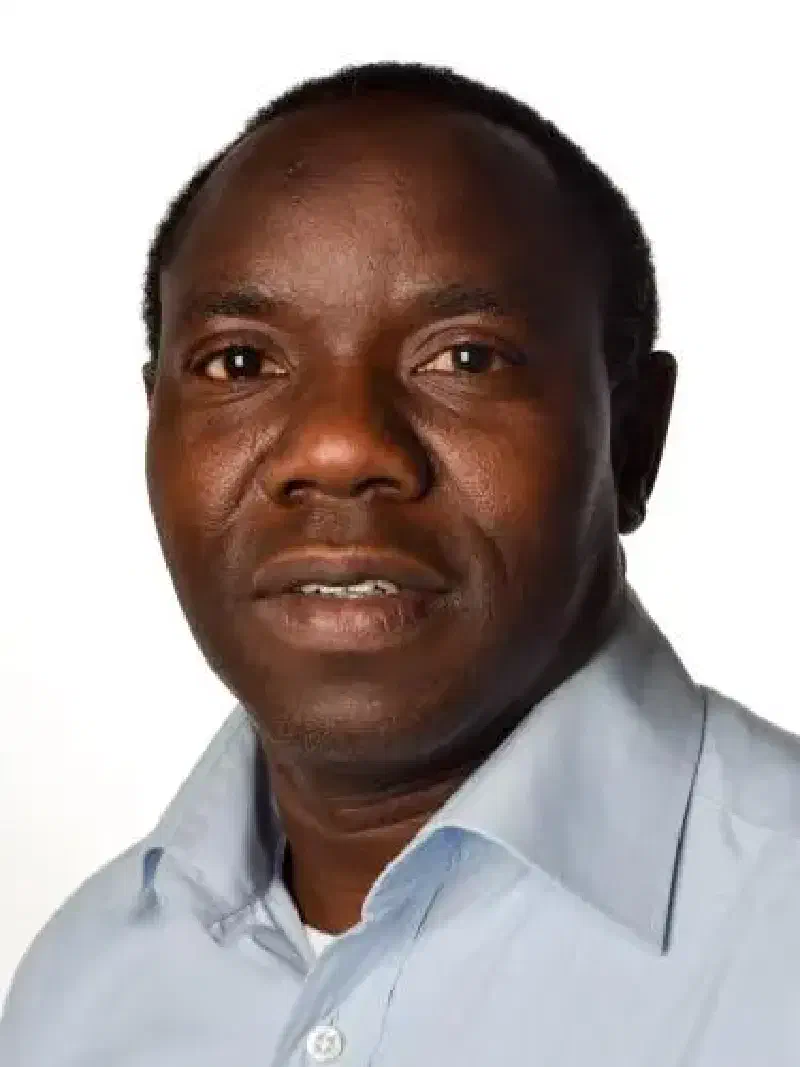
Credit: UBC
Introduction #
Anotida Madzvamuse is a distinguished mathematician and computational biologist who joined the University of British Columbia (UBC) as a Full Professor in the Department of Mathematics in October 2022. His work lies at the intersection of fundamental disciplines - mathematics, numerical analysis, physics, and scientific computing - and experimental sciences such as developmental, cellular, and plant biology, as well as biomedicine. Madzvamuse’s research focuses on developing novel mathematical and computational approaches to address complex biological phenomena, including pattern formation and cell migration. He is also deeply committed to teaching and mentoring at both undergraduate and graduate levels. His recent appointment as a Tier-1 Canada Research Chair in Theoretical and Computational Biology underscores his leadership in the field.
Professional Background and Achievements #
Anotida Madzvamuse’s academic journey began with a BSc (Hons) from the University of Zimbabwe (1994) and a Masters in Mathematics and Education from the University of Enrique Jose Varona, Cuba (1991). He earned his DPhil (2000) and MSc (1997) in Mathematical Modelling and Numerical Analysis from the University of Oxford. His early career included a postdoctoral fellowship at Oxford and an Assistant Professorship at Auburn University (2003–2006). He then joined the University of Sussex, where he rose through the ranks from Lecturer to Professor of Mathematical and Computational Biology (2006–2022).
Madzvamuse’s contributions have been recognized with several prestigious awards, including the Royal Society Wolfson Research Merit Award (2016–2021) and the Theodore von Kaman Fellowship from RWTH Aachen University (2013). He has also received multiple grants from the EPSRC and other international funding bodies, totaling over 5 million euros, supporting his research in spatial patterning, cell migration, and computational modeling.
Research Areas and Projects #
Madzvamuse’s research is characterized by its interdisciplinary nature, combining mathematical modeling, numerical analysis, and computational biology to tackle complex biological questions. His primary research areas include:
- Mathematical Modeling and Analysis: Development of bulk-surface-extracellular partial differential equations (PDEs) to model biological processes such as pattern formation and cell motility.
- Numerical Analysis and Computational Methods: Implementation of finite element and virtual element methods to simulate biological systems.
- Parameter Inference and Estimation: Techniques to infer parameters from experimental data, enhancing the predictive power of mathematical models.
- Applications in Biology and Medicine: Collaborations with health experts to model COVID-19 transmission dynamics and other biomedical phenomena.
One of his most notable projects involves collaborating with UK health authorities to predict COVID-19 outbreaks using advanced computational models, demonstrating the practical impact of his theoretical work. Additionally, he has organized and led research programs at the Isaac Newton Institute for Mathematical Sciences, fostering international collaboration in mathematical biology.
Major Publications #
| Title | Journal | Year | Link |
|---|---|---|---|
| Emergence of Bursting and Delay-Induced Spiral Patterns in Eco-Epidemiological Systems | Bulletin of Mathematical Biology | 2026 | link |
| Using Floquet theory to unravel far-from equilibrium dynamics in reaction-diffusion systems | PNAS Nexus | 2026 | link |
| Pattern Formation of Bulk-Surface Reaction-Diffusion Systems in a Ball | SIAM Journal on Applied Mathematics | 2026 | link |
| Exploring the spatio–temporal dynamics in activator–inhibitor systems through a dual approach of analysis and computation | Mathematical Biosciences | 2025 | link |
| Existence and convergence of stochastic processes underlying a thin layer approximation of a coupled bulk-surface PDE | Journal of Differential Equations | 2025 | link |
| Analysis of the spatio-temporal dynamics of a Rho-GEF-H1-myosin activator-inhibitor reaction-diffusion system | Royal Society Open Science | 2025 | link |
| Parameter Spaces for Cross-Diffusive-Driven Instability in a Reaction-Diffusion System on an Annular Domain | International Journal of Bifurcation and Chaos | 2025 | link |
| Quantifying the organization and dynamics of M. smegmatis morphology from Long-Term Time-Lapse Atomic Force Microscopy | openRxiv | 2025 | link |
| A bulk-surface mechanobiochemical modelling approach for single cell migration in two-space dimensions | Journal of Theoretical Biology | 2024 | link |
| Understanding the dual effects of linear cross-diffusion and geometry on reaction–diffusion systems for pattern formation | Chaos, Solitons and Fractals | 2024 | link |
| VEMcomp: a Virtual Elements MATLAB package for bulk-surface PDEs in 2D and 3D | Numerical Algorithms | 2024 | link |
| Modeling and analysis of the fractional-order epidemic model to investigate mutual influence in HIV/HCV co-infection | Nonlinear Dynamics | 2024 | link |
| A domain-dependent stability analysis of reaction–diffusion systems with linear cross-diffusion on circular domains | Nonlinear Analysis: Real World Applications | 2024 | link |
| The Sussex COVID-19 modelling cell: the methods and successes of a collaboration between public health teams in local authorities, NHS hospital trusts, NHS commissioners, and universities | The Lancet | 2023 | link |
| Virtual element method for elliptic bulk-surface PDEs in three space dimensions | Numerical Methods for Partial Differential Equations | 2023 | link |
| COVID-19 transmission dynamics and the impact of vaccination: modelling, analysis and simulations | Royal Society Open Science | 2023 | link |
| A hospital demand and capacity intervention approach for COVID-19 | PLoS One | 2023 | link |
| Complex dynamics of a discrete-time seasonally forced SIR epidemic model | Mathematical Methods in the Applied Sciences | 2023 | link |
Awards and Recognitions #
- Royal Society Wolfson Research Merit Award (2016–2021): Recognizes Madzvamuse’s world-leading research in mathematical and computational biology, including modeling, analysis, numerical analysis, simulations, applications, and inference theory.
- Theodore von Kaman Fellowship (2013): Awarded by RWTH Aachen University for his significant contributions to mathematical biology.
- Tier-1 Canada Research Chair in Theoretical and Computational Biology (2022–present): Recognizes his leadership and excellence in the field.
- EPSRC Awards: Multiple grants supporting his research on spatial patterning and computational modeling.
- GCRF Award: For the UK-Africa Postgraduate Advanced Study Institute in Mathematical Sciences.
Media and Public Engagement #
Madzvamuse has actively engaged with the public and media through several platforms.
A Mathematician Like Me
Anotida Madzvamuse, a Professor of Mathematics at the University of British Columbia, specializes in applied mathematics with applications in cellular and developmental biology, cancer research, inflammation, and wound healing. His work focuses on creating mathematical models from data and observations that are amenable to rigorous analysis, often involving differential geometry, PDEs, and numerical methods. He emphasizes the predictive power of these models as tools for experimentalists, public health analysts, and other researchers, enabling exploration of scenarios that are experimentally inaccessible. Madzvamuse highlights the importance of resilience and perseverance in securing research funding and overcoming career obstacles, such as promotions and job acquisitions, which he attributes to systemic challenges tied to diversity. He advises early-career mathematicians to believe in their abilities, learn from failures, and persist in their efforts, as success often comes from continuous improvement and determination. His journey reflects a deep commitment to advancing mathematical biology and mentoring the next generation of researchers.
From rural Zimbabwe to international academia
Featured in Living Proof Podcast (Isaac Newton Institute).
Professor Anotida Madzvamuse, a mathematician and computational biologist at the University of Sussex, shares his extraordinary journey from a rural Zimbabwean village to international academia in this podcast interview. He recounts his early life in a resource-limited environment, where he developed resilience and a passion for mathematics, eventually excelling in school despite hardships. Madzvamuse’s career path includes studying in Cuba, earning advanced degrees at Oxford, and teaching in Zimbabwe before securing positions in the US and UK. His research focuses on mathematical and computational biology, particularly pattern formation in nature and single-cell migration, with applications in cancer biology, wound healing, and COVID-19 modeling. He emphasizes the importance of perseverance, mentorship, and learning from failures, while also highlighting initiatives like the Masamu Program and African Institute for Mathematical Sciences (AIMS), which support African mathematicians. His story underscores the transformative power of education, hard work, and global collaboration in overcoming systemic barriers.
The mathematics of cells walking through complex environments:
Known as the smallest biological entity, the cell, is fundamental to life, human or otherwise. Unlike humans, animals and many other living organisms, the cell has no legs, head nor tail, yet cells have a remarkable ability to polarise and exhibit the front and back, associated with human mobility, during migration in complex environments such as in blood, tissue or during disease, such as cancer or during the wound healing process. In this presentation, Prof Anotida Madzvamuse will demonstrate the crucial role of mathematics to help understand how cells walk through complex environments. He will also present current challenges where mathematics has a pivotal role to help lead future discoveries.
Models for growth development in cell motility and pattern formation:
Professor Anotida Madzvamuse discusses the integration of geometric partial differential equations (PDEs) with physics to model cell morphology, motility, and pattern formation, emphasizing the coupling of models for pattern formation and cell motility. He highlights the importance of deriving models driven by experimental observations and physical laws, aiming to create predictive models that can guide and validate experiments. Madzvamuse explores the challenges of coupling interior, surface, and extracellular dynamics, particularly in the context of cell migration and pattern formation on evolving domains. He presents mathematical frameworks, including reaction-diffusion systems with cross-diffusion and domain growth, to relax classical Turing instability conditions, allowing for more flexible and biologically relevant modeling. The talk also touches on viscoelastic models for cell motility, the role of actin concentrations, and the need for experimental validation to refine and calibrate these theoretical models.
Black Excellence in STEM Speaker Series at UBC:
Presented on “Unraveling the Mathematics of Single-Cell Dynamics,” sharing his research and experiences with a broad audience.
Research Profiles #
UBC Department of Mathematics Profile
ResearchGate Profile
ICIAM 2027 Biography
LinkedIn Profile
Google Scholar Profile
Loop Profile
References #
UBC News on CRC Appointment
Black Excellence in STEM Speaker Series
UBC Department of Mathematics Faculty Page
Sussex Profile
Newton Gateway