
Environmental Impact of
Animal Experimentation
#
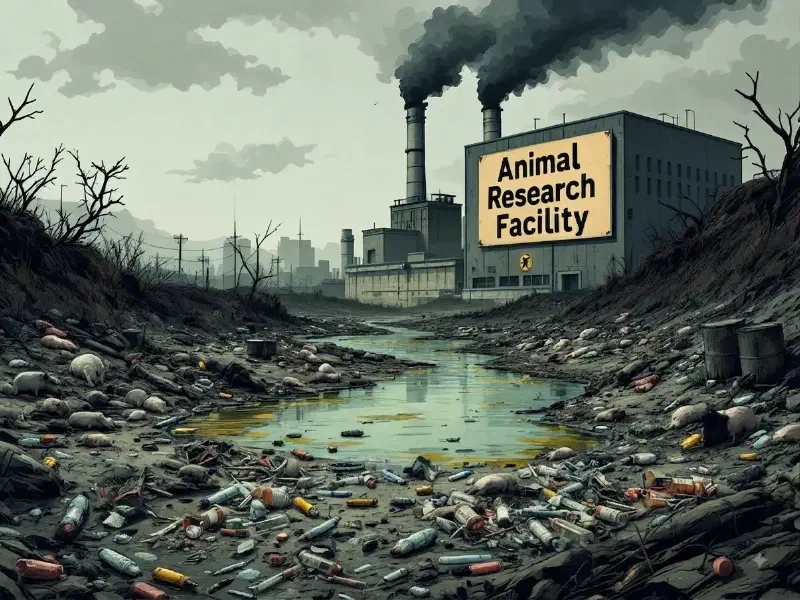
Credit: Mistral
Introduction #
Animal experimentation has long been a cornerstone of biomedical research, yet its environmental impacts remain under-discussed. As global awareness of sustainability grows, the scientific community faces increasing pressure to evaluate and mitigate the ecological consequences of animal testing. This report provides a multidimensional analysis of how animal experimentation affects the environment, encompassing resource consumption, pollution, ecological disruption, carbon footprint, and long-term environmental consequences.
The Progressive Non-Animal Research Society (PNARS) commissioned its own report, the Environmental Impacts Of Animal Experimentation (2023) to assess environmental hazards associated with animal experimentation, particularly in the context of the new St. Paul’s Hospital and Health Campus in Vancouver, British Columbia1. This report by Amelia Porter (linkedin profile) synthesizes findings from scientific literature, regulatory documents, and environmental assessments to provide a comprehensive overview (and is the most cited reference for this page).
Global and Canadian Animal Usage #
Worldwide, a conservative estimate places the number of animals used in experimentation at nearly 200 million annually1. In Canada, the Canadian Council on Animal Care (CCAC) reported 3,692,479 animals used in 2021 by certified institutions, with mice (34.1%), fish (33.1%), and birds (12%) being the most commonly used species1 2. These numbers do not include animals used in non-CCAC certified facilities, suggesting the actual figure is significantly higher1. From 2005 to 2015, Canada moved from the sixth to the fourth largest user of animals in research globally, with notable increases in the use of dogs and non-human primates1.
The following table summarizes the reported animal usage from 2021-2024:
| Year | Total Animals | Species 1 | Species 2 | Species 3 |
|---|---|---|---|---|
| 2024 | 3,706,907 | Fish (1,713,418 - 46.2%) | Mice (1,202,233 - 32.4%) | Cattle (369,769 - 10.0%) |
| 2023 | 3,128,943 | Mice (1,150,348 - 36.8%) | Fish (1,007,102 - 32.2%) | Cattle (547,970 - 17.5%) |
| 2022 | 3,521,143 | Mice (1,340,916 - 38.1%) | Fish (1,198,299 - 34.0%) | Cattle (462,025 - 13.1%) |
| 2021 | 3,692,479 | Mice (1,259,196 - 34.1%) | Fish (1,251,563 - 33.9%) | Birds (444,596 - 12.0%) |
Despite the growing adoption of alternative methods, such as in vitro and in silico technologies, gross animal use has not declined proportionally. This is due, in part, to increased regulatory testing demands and a rise in basic biological research, particularly involving genetically modified animals1.
Resource Consumption #
Energy #
Animal research facilities consume up to ten times more energy per square meter than standard office buildings1 3. This elevated demand is primarily due to:
- The need for 20 or more air exchanges per hour for ventilation, far exceeding standard laboratory requirements1 3.
- Environmental controls for animal housing, including temperature, humidity, and lighting.
- Power-intensive equipment such as anesthesia systems, surgical platforms, and waste disposal units1.
The energy requirements for maintaining these conditions contribute significantly to the carbon footprint of animal research facilities.
Water #
Laboratories consume substantial volumes of water for:
- Animal care, including hydration systems and sanitation.
- Experimental procedures and waste disposal.
- Cleaning and sterilization of equipment and facilities4.
In regions with water scarcity, this demand places additional strain on local resources.
Chemicals and Drugs #
Animal research relies heavily on a wide array of chemicals, including:
- Sanitization and disinfection agents (e.g., bleach, formaldehyde).
- Research chemicals such as irritants, corrosive substances, neurotoxins, reproductive toxins, and carcinogens (e.g., benzene, arsenic, DDT, chloroform)1.
- Pharmaceuticals, including antibiotics, endocrine disruptors, and cytotoxic drugs1.
These substances are often used in larger quantities and for longer durations than in non-animal research, increasing the risk of environmental contamination1.
Plastics and Consumables #
Animal research laboratories require an extensive assortment of single-use plastics and consumables, including:
- Personal protective equipment (PPE) such as gloves, masks, and disposable garments.
- Animal care supplies (e.g., cages, bedding, hydration systems, feed).
- Surgical and experimental supplies (e.g., syringes, needles, catheters, tubing)1.
The disposal of these materials contributes to the plastic waste crisis and increases the volume of biomedical waste requiring incineration or specialized disposal1.
Environmental Pollution #
Wastes Generated #
Animal experimentation produces significant quantities of both non-hazardous and hazardous waste, including:
- Animal carcasses: Millions of animal bodies are rendered as hazardous waste annually1.
- Biological waste: Excrement, bedding, excess feed, and caging contaminated with toxins, chemicals, drugs, or pathogens1.
- Sharps and laboratory waste: Needles, syringes, scalpel blades, and other contaminated materials1.
- Chemical waste: Solvents, reagents, and other hazardous chemicals used in experiments1.
Incineration and Its Impacts #
Incineration is the preferred disposal method for hazardous biomedical waste, including animal carcasses and contaminated materials1. However, this process generates significant environmental pollution:
- Air emissions: Incinerators release particulate matter, nitrogen dioxide (NO₂), sulfur dioxide (SO₂), carbon monoxide (CO), and volatile organic compounds (VOCs)1 3. Animal waste incinerators, in particular, emit higher concentrations of toxic contaminants, including heavy metals (e.g., mercury, lead) and polycyclic aromatic hydrocarbons (PAHs), which are persistent and carcinogenic1 3.
- Dioxins and furans: These highly toxic compounds are produced during the incineration of chlorine-containing materials and are known to cause cancer, reproductive disorders, and immune system damage1 5.
- Greenhouse gases: Incineration contributes to CO₂ emissions, further exacerbating climate change1.
Incineration also requires high fuel consumption to maintain the necessary temperatures, and the resulting ash often contains toxic residues that must be disposed of in specialized landfills1 3.
Water Pollution #
Animal research contributes to water pollution through:
- Sewer discharge: Hospitals and research facilities release untreated or partially treated wastewater containing drugs, hormones, antibiotics, and cytotoxic chemicals into municipal sewer systems1. Many of these substances cannot be effectively removed by standard wastewater treatment processes1.
- Runoff from incineration facilities: Toxic ash and residues can leach into groundwater, contaminating local water supplies1.
The presence of antibiotics, endocrine disruptors, and cytotoxic drugs in waterways poses risks to aquatic ecosystems and may contribute to antimicrobial resistance and other long-term environmental effects1.
Soil Contamination #
Toxic substances from incineration and chemical runoff can accumulate in soil, leading to:
- Bioaccumulation of heavy metals and persistent organic pollutants in plants and animals1.
- Disruption of soil microbiomes, affecting nutrient cycling and ecosystem health6.
Human Health Implications #
Occupational Health Risks #
Laboratory workers involved in animal research face significant occupational health risks, including:
- Allergic reactions: Exposure to animal allergens (e.g., dander, urine, saliva) can cause laboratory animal allergy (LAA), with prevalence rates ranging from 11% to 44% among exposed workers7.
- Asthma: Up to 22% of laboratory animal workers develop occupational asthma due to sensitization to animal allergens7.
- Zoonotic diseases: Animal laboratories are a known source of zoonoses—diseases transmitted from animals to humans. Pathogens such as Salmonella, Brucella, and Hantavirus pose risks to workers, and there is growing concern about the potential for laboratory-acquired infections (LAIs)1 8.
- Chemical exposure: Workers may be exposed to toxic chemicals, anesthetic gases, and radiation, leading to acute and chronic health effects1.
The COVID-19 pandemic has highlighted the risks of laboratory-acquired infections. Research suggests that viral serial passage—a common laboratory procedure involving live animal hosts—may have played a role in the emergence of SARS-CoV-21 9. The Center for Arms Control and Non-Proliferation estimates the odds of a potential pandemic pathogen leaking from a lab at one in four1 10.
Public Health Risks #
Communities near incineration facilities are exposed to toxic emissions through:
- Inhalation of particulate matter, dioxins, and heavy metals1 5.
- Ingestion of contaminated food and water1.
- Dermal contact with contaminated soil or water1.
Exposure to these pollutants is associated with:
- Respiratory diseases (e.g., asthma, bronchitis).
- Cardiovascular diseases (e.g., heart attacks, strokes).
- Cancer (linked to dioxins, PAHs, and heavy metals).
- Reduced life expectancy and increased mortality rates1 5.
Some pollutants, such as dioxins and mercury, are persistent and can be transported long distances, affecting distant communities1 5.
Ecological Disruption and Biodiversity Loss #
Animal experimentation contributes to ecological disruption through:
- Release of toxic substances into air, water, and soil, which can harm non-target species and ecosystems1.
- Genetic pollution: The escape or release of genetically modified animals or organisms into the wild can disrupt local ecosystems and outcompete native species1.
- Habitat destruction: The production of animal feed (e.g., soy, corn) for research animals contributes to deforestation and habitat loss, particularly in regions such as the Amazon11.
The loss of biodiversity weakens ecosystem resilience and reduces the ability of natural systems to adapt to environmental changes6.
Carbon Footprint and Climate Change #
Animal experimentation contributes to climate change through:
- Energy consumption: The high energy demands of animal research facilities result in significant CO₂ emissions1 3.
- Incineration: The combustion of animal waste and contaminated materials releases CO₂, methane (CH₄), and nitrous oxide (N₂O), all potent greenhouse gases1.
- Transportation: The movement of animals, equipment, and waste between facilities contributes to fossil fuel consumption and emissions1.
Climate change, in turn, exacerbates environmental and public health challenges, including:
- Increased frequency of extreme weather events.
- Spread of infectious diseases (e.g., vector-borne illnesses).
- Disruption of ecosystems and loss of biodiversity12 13.
The climate crisis is a human health emergency, as noted by Canada’s Chief Public Health Officer, Dr. Theresa Tam1.
Long-Term Environmental Consequences #
The long-term environmental consequences of animal experimentation include:
- Persistent pollution: Toxic substances such as dioxins, heavy metals, and PAHs can remain in the environment for decades, accumulating in ecosystems and posing ongoing risks to human and ecological health1 5.
- Antimicrobial resistance: The overuse of antibiotics in animal research contributes to the global crisis of antimicrobial resistance, which threatens to render many infections untreatable14.
- Loss of ecosystem services: Biodiversity loss and ecological disruption reduce the ability of ecosystems to provide clean air, water, and soil, as well as pollination and climate regulation6.
These consequences underscore the need for sustainable research practices that minimize environmental harm.
Regulatory Framework and Ethical Considerations #
Current Regulations #
In Canada, oversight of animal experimentation is primarily conducted by the Canadian Council on Animal Care (CCAC), which provides guidelines for the ethical use of animals in research2. However, the CCAC operates on a voluntary basis, and its standards are not legally enforceable1 15. This lack of regulatory power has led to concerns about transparency and accountability in animal research1 15.
Key issues with the current system include:
- Incomplete data: Animal use statistics are based on voluntary reporting from CCAC-certified institutions, excluding private companies and non-certified facilities1 2.
- Lack of trend analysis: The CCAC does not publish long-term trends in animal use, making it difficult to assess progress toward the Three R principles (Replacement, Reduction, Refinement)1 15.
- No environmental oversight: Current regulations focus on animal welfare but do not address the environmental impacts of animal research1.
Ethical Considerations #
The Three R principles—Replacement, Reduction, and Refinement—are widely recognized as a framework for ethical animal research. However, their implementation has been inconsistent. Key ethical concerns include:
- Scientific validity: Growing evidence suggests that animal models often fail to predict human outcomes, leading to misleading results and wasted resources1 16.
- Public accountability: There is a lack of transparency in reporting animal use numbers, experimental procedures, and environmental impacts1.
- Alternatives bias: Some scientific journals exhibit animal-reliance bias, requesting animal data to validate non-animal studies, which hinders the adoption of innovative methods1 17.
Progress in Regulation #
Recent regulatory changes offer hope for reducing animal testing:
- Canada: In 2023, amendments to the Canadian Environmental Protection Act (CEPA) and the Food and Drug Act banned cosmetic testing on animals and committed to phasing out toxicity testing by 20351.
- United States: The FDA Modernization Act (2022) allows the use of non-animal testing methods (e.g., cell-based assays, organ-on-a-chip models) for drug approvals, reducing reliance on animal tests18.
- European Union: The 2010 EU Directive aims to phase out animal experiments, and the 2021 European Parliament resolution calls for accelerated transition to innovation without animals1.
These developments signal a global shift toward reducing and eventually eliminating animal testing in favor of more human-relevant and sustainable methods.
Alternative Methods to Animal Testing #
In Silico Modeling #
In silico methods use computational models to simulate biological processes, drug responses, and toxicity. These approaches include:
- Quantitative Structure-Activity Relationship (QSAR) models: Predict the biological activity of chemicals based on their molecular structure19.
- Virtual control groups (VCGs): Use historical animal data to create predictive models, reducing the need for new animal tests while maintaining regulatory compliance20.
In Vitro Methods #
In vitro (cell-based) methods provide human-relevant alternatives to animal testing:
- Organ-on-a-chip technology: Microfluidic devices that mimic the structure and function of human organs, allowing for more accurate drug testing and disease modeling1 21.
- 3D cell cultures: Human cells grown in three-dimensional scaffolds to better replicate tissue architecture and function21.
- Human stem cells: Induced pluripotent stem cells (iPSCs) can be differentiated into various cell types for testing21.
Economic and Scientific Benefits #
Transitioning to non-animal methods offers significant advantages:
- Cost savings: In vitro and in silico methods can reduce R&D costs by 10% to 26%[^22].
- Faster results: Non-animal methods can accelerate drug discovery and approval, reducing the time to market[^22].
- Improved accuracy: Human-based models provide more predictive results for human health outcomes, reducing the risk of failed clinical trials1 [^22].
- Environmental benefits: Non-animal methods reduce resource consumption, waste generation, and pollution[^22].
Case Study: St. Paul’s Hospital and Providence Health Care #
Current Practices #
St. Paul’s Hospital (SPH), operated by Providence Health Care (PHC), is a major research facility in Vancouver, British Columbia. Animal experimentation is conducted at SPH, including research involving rodents, rabbits, sheep, pigs, and dogs1. The Heart and Lung Institute at SPH offers pre-clinical animal testing services for contract research, including studies on cardiovascular disease, COPD, and muscular dystrophy1.
Despite PHC’s commitments to environmental sustainability, there is a lack of transparency regarding animal use and its environmental impacts. Key findings include:
- No public reporting of animal use numbers, species, or experimental procedures1.
- No mention of animal experimentation in sustainability plans or environmental impact assessments1.
- No alignment with the Three R principles in public documentation1.
Environmental Hazards at SPH #
The environmental hazards associated with animal research at SPH include:
- Resource consumption: High energy and water use for animal facilities1 3.
- Waste generation: Production of biohazardous and biomedical waste, including animal carcasses, bedding, and contaminated materials1.
- Incineration: Animal waste from SPH is likely transported to off-site facilities for incineration, contributing to air pollution and greenhouse gas emissions1. For example, affiliated institutions such as UBC transport pathological waste to Mission, BC, and biomedical waste to Alberta for incineration1.
- Sewer discharge: SPH is subject to the Hospital Pollution Prevention Bylaw (Bylaw No. 319), which requires hospitals to develop pollution prevention plans to reduce the discharge of biomedical waste, unused drugs, formaldehyde, and silver-rich solutions into sewer systems1.
Opportunities for Change #
The construction of the New St. Paul’s Hospital and Health Campus (NSPH) presents a unique opportunity to transition away from animal experimentation. Key recommendations for PHC and SPH include:
- Adopt non-animal methods: Invest in organ-on-a-chip technology, in vitro models, and computational methods to replace animal testing1.
- Improve transparency: Publicly report animal use numbers, species, and experimental procedures, as well as efforts to achieve the Three R principles1.
- Align with sustainability goals: Incorporate the environmental impacts of animal research into sustainability planning and reporting1.
- Establish an alternatives center: Create a center for human-relevant innovation at NSPH, similar to the Canadian Centre for Alternatives to Animal Methods (CCAAM) at the University of Windsor1.
- Address questionable research practices: Implement registered reports and comprehensive reporting guidelines to improve the rigor and reproducibility of animal research1.
Recommendations #
For Healthcare Institutions and Research Facilities #
- Phase out animal experimentation: Transition to non-animal methods (e.g., organ-on-a-chip, in vitro models, in silico modeling) to reduce environmental and ethical concerns1 [^22].
- Improve transparency: Publicly report animal use data, including numbers, species, and experimental procedures, as well as efforts to achieve the Three R principles1.
- Adopt sustainable practices: Reduce energy and water consumption, improve waste management, and minimize the use of toxic chemicals in research1 3.
- Invest in innovation: Allocate funding for alternative methods and establish centers for human-relevant research1.
- Collaborate with regulators: Work with government agencies to update regulatory frameworks and promote the adoption of non-animal testing methods1.
For Governments and Regulatory Bodies #
- Strengthen regulations: Enforce mandatory reporting of animal use and environmental impacts, and phase out animal testing in favor of non-animal methods1 15.
- Fund alternative methods: Provide grants and incentives for the development and adoption of non-animal testing technologies1 [^22].
- Update drug approval processes: Follow the example of the FDA Modernization Act and allow non-animal methods for drug safety and efficacy testing18.
- Ban animal testing in cosmetics and toxicity testing: Expand bans on animal testing to include all categories of research, not just cosmetics1.
For Scientific Journals and Publishers #
- Eliminate animal-reliance bias: Stop requiring animal data to validate non-animal studies, and promote the Three R principles in peer review1 17.
- Encourage registered reports: Adopt preregistration for animal studies to improve transparency and reproducibility1.
- Promote open access: Make animal use data and environmental impact assessments publicly available1.
For the Public and Advocacy Groups #
- Raise awareness: Educate the public about the environmental and ethical impacts of animal experimentation1.
- Advocate for change: Support legislation and policies that reduce or eliminate animal testing1.
- Promote alternatives: Encourage the adoption of non-animal methods in research and education[^22].
Conclusion #
Animal experimentation exerts a substantial and multifaceted environmental impact, encompassing pollution, resource consumption, ecological disruption, and contributions to climate change. While animal research has historically advanced medical science, its environmental costs and ethical concerns necessitate a critical reevaluation.
The transition to non-animal research methods, supported by innovations such as in silico modeling, in vitro technologies, and organ-on-a-chip systems, offers significant economic, scientific, and environmental benefits. These alternatives reduce resource consumption, pollution, and carbon footprint while improving the predictive accuracy and safety of drug development.
Stakeholders—including healthcare institutions, governments, scientific journals, and the public—must collaborate to implement stronger regulations, fund sustainable research, and promote interdisciplinary innovation. The future of biomedical research lies in balancing scientific progress with environmental stewardship, ensuring that life-saving advancements do not come at the expense of ecological health and human well-being.
As noted by Dr. Theresa Tam, Canada’s Chief Public Health Officer:
“Climate action is public health action. Let’s boldly act together and act now.”1
References #
-
Porter, A., Environmental Impacts of Animal Experimentation: Opportunities for Change at the New St. Paul’s Hospital and Health Campus, Progressive Non-Animal Research Society (PNARS), 2023
This report examines the significant environmental footprint of animal experimentation, focusing on the energy, water, and waste demands of traditional animal research facilities. It highlights opportunities for transitioning to New Approach Methodologies (NAMs) at the new St. Paul’s Hospital and Health Campus to reduce greenhouse gas emissions, minimize hazardous biomedical waste, and promote more sustainable, human-relevant research practices. ↩︎ ↩︎ ↩︎ ↩︎ ↩︎ ↩︎ ↩︎ ↩︎ ↩︎ ↩︎ ↩︎ ↩︎ ↩︎ ↩︎ ↩︎ ↩︎ ↩︎ ↩︎ ↩︎ ↩︎ ↩︎ ↩︎ ↩︎ ↩︎ ↩︎ ↩︎ ↩︎ ↩︎ ↩︎ ↩︎ ↩︎ ↩︎ ↩︎ ↩︎ ↩︎ ↩︎ ↩︎ ↩︎ ↩︎ ↩︎ ↩︎ ↩︎ ↩︎ ↩︎ ↩︎ ↩︎ ↩︎ ↩︎ ↩︎ ↩︎ ↩︎ ↩︎ ↩︎ ↩︎ ↩︎ ↩︎ ↩︎ ↩︎ ↩︎ ↩︎ ↩︎ ↩︎ ↩︎ ↩︎ ↩︎ ↩︎ ↩︎ ↩︎ ↩︎ ↩︎ ↩︎ ↩︎ ↩︎ ↩︎ ↩︎ ↩︎ ↩︎ ↩︎ ↩︎ ↩︎ ↩︎ ↩︎ ↩︎ ↩︎ ↩︎ ↩︎ -
Canadian Council on Animal Care (CCAC), Annual Animal Use Data Reports, Canadian Council on Animal Care, 2022
This report provides comprehensive statistical data on the number and types of animals used in science across Canada, categorized by species, purpose of use, and level of invasiveness. It serves as a critical baseline for understanding the scale of animal experimentation in the country and highlights the ongoing need to accelerate the adoption of alternative, non-animal research methods to reduce these numbers. ↩︎ ↩︎ ↩︎ -
Cubitt, S., & Sharp, G., Maintaining quality and reducing energy in research animal facilities, Animal Technology and Welfare, 2011
This paper discusses strategies for improving energy efficiency in laboratory animal facilities without compromising the high environmental control standards required for animal welfare and research validity. While focused on operational improvements, it underscores the massive resource consumption inherent in maintaining traditional animal housing, thereby strengthening the economic and environmental arguments for transitioning to less resource-intensive in vitro and in silico alternatives. ↩︎ ↩︎ ↩︎ ↩︎ ↩︎ ↩︎ ↩︎ ↩︎ -
Lam, C., MacDonald, J., Ho, A., Lai, J., Dean, M., Sim, N., & Lu, N., Waste solutions for Metro Vancouver, University of British Columbia, 2010
This report analyzes municipal and biomedical waste management strategies in the Metro Vancouver region, highlighting the environmental and public health challenges associated with hazardous waste disposal. Although not exclusively focused on animal research, it provides crucial context for understanding the broader waste stream impacts of biomedical facilities, including the significant volume of hazardous, infectious, and plastic waste generated by traditional animal testing protocols. ↩︎ -
Franchini, M., Rial, M., Buiatti, E., & Bianchi, F., Health effects of exposure to waste incinerator emissions: a review of epidemiological studies, Annali dell’Istituto Superiore di Sanità, 2004
This epidemiological review examines the public health risks associated with emissions from waste incinerators, including the release of dioxins, furans, and heavy metals. It is highly relevant to animal research because a significant portion of hazardous biomedical and animal carcass waste is disposed of via incineration, linking the environmental footprint of animal testing directly to potential community health hazards and air pollution. ↩︎ ↩︎ ↩︎ ↩︎ ↩︎ -
Thornton, J., McCally, M., Orris, P., & Weinberg, J., Hospitals and plastics: Dioxin Prevention and Medical Waste Incinerators, Public Health Reports, 1996
This article investigates the link between medical waste incineration, particularly of chlorinated plastics like PVC commonly used in laboratories and hospitals, and the release of toxic dioxins into the environment. It highlights the hidden public health costs of medical waste management, reinforcing the argument that reducing the physical footprint of animal research through alternative methods also mitigates the toxic emissions associated with disposing of animal-related medical waste. ↩︎ ↩︎ ↩︎ -
Ellis, R. J., Questionable Research Practices, Low Statistical Power, and Other Obstacles to Replicability: Why Preclinical Neuroscience Research Would Benefit from Registered Reports, eNeuro, 2022
This paper addresses the reproducibility crisis in preclinical neuroscience, attributing it to low statistical power, publication bias, and questionable research practices in animal studies. The author advocates for the adoption of Registered Reports to improve methodological rigor and transparency, while implicitly highlighting that the inherent variability and ethical costs of animal models make the shift toward more controlled, human-relevant in vitro and computational models an urgent scientific priority. ↩︎ ↩︎ -
Hankenson, F. C., Johnston, N. A., Weigler, B. J., & Di Giacomo, R. F., Zoonoses of occupational health importance in contemporary laboratory animal research, Comparative Medicine, 2003
This review outlines the occupational health risks faced by laboratory personnel due to exposure to zoonotic diseases transmitted by research animals. It details the potential for allergic reactions, infections, and other health complications, underscoring a major, often-overlooked human cost of animal experimentation and strengthening the case for transitioning to safer, non-animal research methodologies that protect both animal and human health. ↩︎ -
Sirotkin, K., & Sirotkin, D., Might SARS-CoV-2 Have Arisen via Serial Passage through an Animal Host or Cell Culture? A potential explanation for much of the novel coronavirus’ distinctive genome, BioEssays, 2020
This hypothesis paper explores the possibility that SARS-CoV-2 may have emerged through serial passage in an animal host or laboratory cell culture, rather than solely through natural zoonotic spillover. It highlights the inherent biosafety risks and unintended consequences associated with manipulating pathogens in animal models or in vitro systems, emphasizing the need for stringent oversight and the development of safer, predictive computational models for virology research. ↩︎ -
Klotz, L. C., & Sylvester, E. J., The consequences of a lab escape of a potential pandemic pathogen, Frontiers in Public Health, 2014
This article assesses the catastrophic public health risks associated with the accidental release of potential pandemic pathogens from research laboratories. By analyzing historical near-misses and the inherent fallibility of human-operated biosafety protocols, the authors argue for a critical reevaluation of gain-of-function research and animal-based pathogen studies, advocating for a shift toward safer in silico and advanced in vitro modeling to mitigate global biosecurity threats. ↩︎ -
Meigs, L., Smirnova, L., Rovida, C., Leist, M., & Hartung, T., Animal testing and its alternatives - the most important omics is economics, ALTEX, 2018
This comprehensive review argues that the transition from animal testing to New Approach Methodologies (NAMs) is driven not only by ethical and scientific imperatives but also by compelling economic factors. The authors demonstrate that in vitro and in silico alternatives are significantly more cost-effective, faster, and scalable than traditional animal models, making the “economics” of modern toxicology a powerful catalyst for regulatory and industrial adoption of human-relevant testing strategies. ↩︎ -
Romanello, M., et al., The 2022 Report of The Lancet Countdown on Health and Climate Change: compounding health crises, The Lancet, 2022
This landmark report details the profound and escalating impacts of climate change on global human health, emphasizing the urgent need for all sectors, including healthcare and scientific research, to reduce their carbon footprints. In the context of biomedical research, it provides a macro-level justification for abandoning resource-intensive animal experimentation in favor of sustainable, low-carbon New Approach Methodologies (NAMs) to align scientific progress with global climate goals. ↩︎ -
Lacetera, N., Impact of climate change on animal health and welfare, Animal Frontiers, 2019
This article examines how rising global temperatures, extreme weather events, and changing ecosystems directly compromise the health and welfare of animals, including those used in agricultural and research settings. It underscores the compounding ethical and environmental burdens of maintaining large-scale animal facilities in a warming world, reinforcing the urgency of transitioning to climate-resilient, non-animal research methodologies. ↩︎ -
World Health Organization (WHO), Antimicrobial Resistance, World Health Organization, 2021
This fact sheet outlines the global threat of antimicrobial resistance (AMR), driven by the overuse and misuse of antibiotics in human medicine, agriculture, and animal husbandry. It highlights how the intensive use of prophylactic antibiotics in laboratory animal facilities contributes to the broader AMR crisis, advocating for reduced animal reliance and the adoption of sterile, human-relevant in vitro models to mitigate this public health emergency. ↩︎ -
Black, V., Fenton, A., & Ormandy, E. H., Protecting Canada’s Lab Animals: The Need for Legislation, Animals, 2022
This paper critiques Canada’s current voluntary system for overseeing animal research, arguing that the Canadian Council on Animal Care (CCAC) lacks the legal authority, transparency, and enforcement mechanisms necessary to ensure adequate animal welfare. The authors advocate for comprehensive national legislation to mandate the adoption of New Approach Methodologies (NAMs) and enforce stricter accountability in the use of animals in science. ↩︎ ↩︎ ↩︎ ↩︎ -
Groff, K., Bachli, E., Lansdowne, M., & Capaldo, T., Review of Evidence of Environmental Impacts of Animal Research and Testing, Environments, 2014
This comprehensive review quantifies the substantial environmental footprint of animal-based research, detailing the high consumption of energy, water, and single-use plastics, as well as the generation of hazardous biomedical waste. The authors conclude that transitioning to New Approach Methodologies (NAMs) is not only an ethical and scientific imperative but also a critical environmental necessity to reduce the ecological burden of the biomedical research sector. ↩︎ -
Krebs, C. E., Lam, A., McCarthy, J., Constantino, H., & Sullivan, K., Animal-reliance bias in publishing is a potential barrier to scientific progress, bioRxiv, 2022
This preprint investigates the systemic “animal-reliance bias” in scientific publishing, where journals and reviewers disproportionately favor studies using traditional animal models over those employing innovative New Approach Methodologies (NAMs). The authors argue that this entrenched bias stifles scientific innovation, delays the adoption of more predictive human-relevant models, and ultimately hinders medical progress by perpetuating outdated research paradigms. ↩︎ ↩︎ -
U.S. Congress / U.S. Food and Drug Administration (FDA), FDA Modernization Act of 2022, U.S. Congress, 2022
This landmark legislation amends the Federal Food, Drug, and Cosmetic Act to remove the longstanding federal mandate that new drugs must be tested on animals before entering human clinical trials. By explicitly allowing the use of New Approach Methodologies (NAMs), such as organ-on-a-chip systems, computer modeling, and cell-based assays, the Act represents a historic regulatory shift toward more predictive, human-relevant safety testing. ↩︎ ↩︎ -
Neovarsity, A Beginner’s Guide to QSAR Modeling in Cheminformatics for Biopharma, Neovarsity, n.d.
This educational guide introduces Quantitative Structure-Activity Relationship (QSAR) modeling, a powerful in silico tool used in cheminformatics to predict the biological activity and toxicity of chemical compounds based on their molecular structure. It highlights how QSAR models serve as a vital, non-animal alternative in early-stage drug discovery and regulatory toxicology, enabling researchers to screen thousands of compounds rapidly and cost-effectively without animal testing. ↩︎ -
Sanz, F., et al., Transitional initiatives for advancing the phasing out of the use of animals for drug and chemical safety testing: The IHI VICT3R project for reducing the use of animals by implementing virtual control groups, ScienceDirect, 2025
This paper details the Innovative Health Initiative (IHI) VICT3R project, which aims to accelerate the regulatory acceptance of New Approach Methodologies by developing and validating “virtual control groups.” By using historical data and computational modeling to replace live animal control groups in toxicity studies, the project seeks to significantly reduce animal use while maintaining or improving the statistical rigor and reliability of safety assessments. ↩︎ -
Wilkinson, M., The Potential of Organ on Chip Technology for Replacing Animal Testing, Animal Experimentation: Working Towards a Paradigm Change (Brill), 2019
This book chapter explores the transformative potential of organ-on-a-chip technology as a viable, human-relevant alternative to traditional animal testing. The author details how these microphysiological systems can accurately replicate human organ functions and disease states, arguing that their continued development and regulatory acceptance are essential for achieving a true paradigm shift in biomedical research and ↩︎ ↩︎ ↩︎